HVAC Learning Center
Air Conditioning
Why is my AC running but not cooling my house?
An air conditioner cools your home by moving heat, not by creating cold air.
Refrigerant carries heat from the indoor coil to the outdoor unit, where it's released outside before the cycle starts again. At the same time, air has to move freely across both coils, and the electrical components have to keep everything operating in the right sequence.
When any part of that process starts struggling, cooling performance is usually one of the first things you'll notice. The system may continue running and blowing air through the vents, but it won't remove heat from your home as effectively as it should.
Common causes include a dirty air filter, a frozen evaporator coil, low refrigerant from a leak, dirty coils, a failed capacitor, thermostat issues, or other electrical component failures. In some cases, the outdoor unit may stop operating while the indoor blower continues running, making it feel like the system is working even though very little cooling is actually taking place.
A system that runs continuously without cooling shouldn't be ignored. Longer run times increase energy consumption, place additional strain on the equipment, and can eventually lead to problems like ice forming on the refrigerant lines or indoor coil.
The good news is that not every cooling problem requires a major repair. Some issues are relatively simple to correct, while others require testing by a qualified technician to determine exactly what's preventing the system from removing heat the way it was designed to.
Why is my air conditioner freezing up?
A frozen air conditioner isn't really an ice problem. Ice is just the symptom. Somewhere along the way, the system either lost airflow or lost refrigerant, and the freezing was the result.
Poor airflow is the most common place to start looking. A clogged air filter, closed supply or return vents, furniture blocking airflow, dirty evaporator coils, damaged ductwork, or a blower motor that's no longer moving enough air can all allow the indoor coil to get colder than it should.
Low refrigerant can create the same result for a different reason. As refrigerant pressure drops, so does the coil temperature. Once it falls below freezing, moisture in the air begins sticking to the coil as ice. The longer the system runs, the more that ice builds, and the worse the airflow becomes.
One thing that's worth clearing up: refrigerant doesn't get "used up" like gasoline. If it's low, there's almost always a leak that needs to be found and repaired.
If you discover ice on the refrigerant lines or indoor coil, turn the thermostat from Cool to Off, but leave the fan set to On if possible. That helps speed up the thawing process. Once thawed, a technician can more accurately diagnose what caused the freezing.
Why is my AC leaking water?
Air conditioners are supposed to make water. If your system is cooling properly and pulling humidity out of the air, it's producing condensation every time it runs.
Under normal conditions, you'll never see it. Moisture forms on the indoor evaporator coil, drips into the drain pan, and leaves the home through the condensate drain line.
When homeowners find water around the indoor unit, the drain is usually the first place to look. A clogged condensate drain line is one of the most common causes. Dirt, algae, mold, and other debris build up over time until water backs up into the drain pan. Some systems overflow onto the floor. Others have a safety float switch that shuts the air conditioner off before the pan can spill over.
A clogged drain isn't the only possibility. We also find cracked drain pans, disconnected drain lines, frozen evaporator coils, and occasionally systems that weren't installed with enough slope to drain correctly.
Humidity can make the problem show up faster. During an East Tennessee summer, an air conditioner may remove several gallons of moisture from the air in a single day. A drain line that's only partially restricted can keep up for a while, then suddenly can't.
Don't ignore water around your HVAC equipment, even if it seems minor. A slow leak can turn into water damage, mold growth, stained drywall, damaged flooring, or ceiling repairs if it's left alone. In most cases, it doesn't take long to determine whether the cause is a clogged condensate drain, a frozen evaporator coil, or another drainage issue.
Why is my AC making a buzzing noise?
Not every buzzing noise means the same thing, but it's usually worth paying attention to. Air conditioners have several electrical and mechanical components that can make a buzzing sound as they begin to wear, loosen, or fail.
One of the more common causes, especially if the buzzing is coming from the outdoor unit, is a failing capacitor. Capacitors help start and run the motors in the condenser, and it's not unusual for one to buzz before it fails completely. Loose electrical connections, a worn contactor, or even a failing compressor can create similar noises.
Buzzing isn't always electrical. We've also found loose access panels, refrigerant lines vibrating against the cabinet, fan blades hitting debris, and even sticks or leaves caught inside the outdoor unit creating more noise than you'd expect.
It's tempting to take the panel off and have a look, but that's one repair that's better left alone. The electrical compartment contains high-voltage components, and some of them can still hold a charge even after the power has been turned off.
If the buzzing starts around the same time you notice weak cooling, hard starting, or breakers that trip more than once, don't ignore it. Unusual noises are often one of the first signs that a component needs attention. Finding the cause early can sometimes prevent a much larger repair later.
Why is my AC making a rattling noise?
A rattling air conditioner doesn't always mean an expensive repair is around the corner. More often than not, something has simply worked loose.
Loose access panels, vibrating refrigerant lines, debris inside the outdoor unit, and worn fan components are some of the most common causes. We've also found loose condenser fan blades, mounting hardware, and screws that gradually backed out after years of normal vibration. Outdoor equipment expands and contracts with changing temperatures, and weather exposure doesn't help.
Where the noise is coming from can narrow things down. A rattling noise from the outdoor unit usually points to loose hardware, the condenser fan, or debris inside the cabinet. If the rattling is coming from inside the house, ductwork, supply vents, return grilles, or other airflow-related components may be vibrating instead.
It also helps to notice when the noise happens. Does it rattle for a few seconds when the system starts? Only after it shuts off? Or does it continue the entire time the air conditioner is running? Those patterns often help identify whether you're dealing with vibration, airflow, or a mechanical problem.
If the rattling is getting louder, changing over time, or you've started noticing weaker cooling along with it, don't ignore it. A loose panel may stay a loose panel, but a worn fan component or failing motor usually won't. Catching the source early can often prevent additional damage and a more expensive repair.
Why is my AC tripping the breaker?
If your air conditioner keeps tripping the breaker, the breaker is doing exactly what it was designed to do. It's protecting your home and your HVAC equipment from an electrical problem. Resetting it once after a storm or power outage isn't unusual, but if it continues to trip, something is wrong.
When the breaker trips can point you in the right direction. If it happens as soon as the air conditioner starts, the compressor, capacitor, or another component with a high startup electrical demand may be the cause. If the system runs for a while before the breaker trips, overheating, dirty coils, restricted airflow, or a failing fan or blower motor become more likely.
There are a couple of things you can check safely. Replace a heavily clogged air filter if it's overdue, and make sure the outdoor coil isn't packed with grass clippings, cottonwood, leaves, or other debris that can restrict airflow. Beyond that, diagnosing the problem usually requires electrical testing to measure current draw, inspect wiring, and determine whether a component is beginning to fail.
Try to resist the temptation to keep resetting the breaker just to get the air conditioner running again. If the breaker continues to trip, it's responding to a condition that needs to be corrected. Finding the cause before parts are damaged is almost always easier than dealing with the repair after something finally fails.
Why is my outdoor AC unit not turning on?
If your outdoor AC unit won't turn on, don't assume the problem is sitting outside.
Quite a few cooling problems actually start somewhere else in the system.
The outdoor unit is really the last step in a longer process. The thermostat has to ask for cooling, the electrical controls have to pass that signal along, and the safety switches have to allow the system to run. From there, the contactor acts like a heavy-duty electrical switch, the capacitor provides the extra boost needed to start the motors, the compressor begins circulating refrigerant through the system, and the condenser fan pulls outdoor air across the coil to carry heat away from your home.
If any one of those steps doesn't happen, the outdoor unit may never start. The indoor blower can still be running, so you'll feel air coming through the vents, but it won't be cool because the system isn't moving heat outside.
A tripped breaker, blown fuse, failed capacitor, worn contactor, thermostat problem, or a safety switch can all keep the outdoor unit from coming on. A clogged condensate drain can do the same thing on many systems by triggering a float switch that shuts the equipment down before water can overflow and cause damage.
There are a few basic things you can check yourself. Make sure the thermostat is set to Cool, replace a heavily clogged air filter if it's overdue, and verify that the breaker hasn't tripped. If everything looks normal and the outdoor unit still won't start, the next step is usually electrical testing to determine whether the system has lost power, lost the cooling signal, or has a component that's no longer operating correctly.
Why does my AC keep turning on and off?
If your air conditioner keeps turning on and off every few minutes, that's usually a sign something isn't operating the way it should. In the HVAC industry, this is called short cycling.
A normal cooling cycle should last long enough to cool your home and remove humidity before the system shuts off. When the air conditioner starts, runs for only a few minutes, and then starts again shortly afterward, comfort suffers and the extra starts and stops can put additional wear on the equipment.
There isn't just one cause of short cycling. A dirty air filter, restricted airflow, thermostat problems, low refrigerant, electrical component failures, or a system that's shutting itself down to protect against a developing problem can all produce the same symptom. An air conditioner that's oversized for the home can short cycle too, cooling the thermostat quickly without running long enough to remove much humidity from the rest of the house.
That's one reason a home can feel cool but still feel damp or clammy. Air conditioners don't just lower the temperature—they remove moisture from the air. If they aren't running long enough, humidity has less time to drain away through the condensate system, even though the thermostat says you've reached the set temperature.
The timing can be helpful, too. Does the system shut off after only a minute or two? Does it restart almost immediately? Or is it cycling normally during mild weather but acting differently on hotter days? Those details can help narrow down whether you're dealing with an airflow problem, a refrigerant issue, an electrical fault, thermostat trouble, or an equipment sizing issue.
Because so many different problems can cause short cycling, replacing parts based on the symptom alone often leads to unnecessary repairs. Finding out why the system is shutting off is the important part.
Why does my AC smell musty?
If your air conditioner smells like a damp basement or a wet towel every time it starts, something inside the system is staying damp longer than it should.
Your air conditioner removes humidity from the air every time it runs. That moisture collects on the indoor evaporator coil, drains into the condensate pan, and leaves the home through the condensate drain line. When water doesn't drain or dry the way it's supposed to, mold, mildew, and bacteria begin growing on damp surfaces, creating the musty smell.
The evaporator coil, condensate drain pan, condensate drain line, air filter, and ductwork are the most common places we find the source of the odor. Most homeowners notice it during the first few minutes of a cooling cycle because that's when air starts moving across those damp surfaces and carries the smell through the home.
East Tennessee's humidity makes the problem more noticeable. During the summer, an air conditioner pulls a tremendous amount of moisture out of the air every day. A clogged drain line, restricted airflow, or moisture that never has a chance to dry between cooling cycles gives mold and mildew exactly the environment they need.
A musty smell doesn't automatically mean you need a major repair, but it does mean the system needs attention. Cleaning the evaporator coil, clearing a clogged condensate drain, replacing a dirty air filter, or correcting an airflow problem often eliminates the odor while improving indoor air quality and overall system performance.
How do I know if my AC needs repair?
Most air conditioners don't quit without warning. Performance changes first.
Maybe the house isn't cooling like it used to. Airflow feels weaker. The system starts making a new noise, develops a musty smell, leaks water, freezes up, or starts turning on and off more than normal. Some homeowners notice higher electric bills, others notice the thermostat is set to 72°, but the house never quite gets there.
Those changes all point to the same thing: the system isn't operating normally. The cause could be something simple, like a clogged air filter, or it could be low refrigerant, a failing capacitor, restricted airflow, a blower motor problem, or another component that's beginning to fail.
Pay attention to changes, not just complete breakdowns. Air conditioners rarely go from working perfectly one day to completely dead the next. Catching a problem early often means a simpler repair, less strain on the equipment, and a lower chance of losing cooling during the hottest part of the summer.
If your air conditioner is behaving differently than it did a few weeks ago, it's worth finding out why instead of waiting to see what happens next.
Heat Pumps
Are heat pumps effective in Tennessee?
They are, and East Tennessee is actually a great place for one.
A lot of the hesitation comes from older heat pumps that earned a reputation for struggling during cold weather. Modern heat pumps are a different story. Today's systems continue heating well below freezing, which covers the vast majority of winter days across East Tennessee.
One thing that surprises a lot of homeowners is that a heat pump doesn't create heat the way a gas furnace or electric heater does. It moves heat. Even when it feels cold outside, there's still heat energy in the outdoor air. The heat pump captures that energy, concentrates it, and transfers it indoors during the winter. In the summer, it simply reverses the process to cool your home.
When temperatures drop into the coldest part of winter, many systems automatically bring on auxiliary heat for additional heating capacity. If you have a dual fuel system, the heat pump may hand the job over to a gas furnace instead. It's also completely normal to see steam coming from the outdoor unit during a defrost cycle. The system is removing frost from the outdoor coil before switching back to heating.
Like any HVAC system, performance comes down to proper design as much as the equipment itself. A correctly sized heat pump, well-designed ductwork, good insulation, and proper installation make far more difference than the name on the equipment.
For most homeowners in East Tennessee, a modern heat pump provides efficient heating through the winter, air conditioning through the summer, and does both with a single system.
Why is my heat pump blowing cool air?
This is probably the question we answer more than any other heat pump question.
Most of the time, the heat pump isn't blowing cold air at all. It just isn't blowing air that feels as hot as a furnace.
A gas furnace produces short bursts of very warm air. A heat pump works differently. Instead of creating heat, it moves heat from the outdoor air into your home and delivers a steady stream of warm air over a longer period of time. If you hold your hand over one of the supply vents, the air may feel cooler than you're expecting even though the house is warming up exactly as it should.
Cold weather can make that difference even more noticeable. It's also normal for a heat pump to enter a defrost cycle from time to time. During defrost, the system temporarily switches into cooling mode to melt frost off the outdoor coil. That can send cooler air through the vents for a few minutes before normal heating resumes.
The thermostat tells the real story. If your home is reaching and maintaining the temperature you've selected, the heat pump is doing its job. If the indoor temperature keeps falling, the auxiliary heat isn't coming on when it should, or the system can't keep up with the weather outside, then it's time to find out why.
Is frost on my heat pump normal?
Yes. A light coating of frost on the outdoor unit is a normal part of how a heat pump operates during cold weather.
It catches a lot of homeowners off guard because the system is heating the house. The outdoor coil is actually cold enough to absorb heat from the outside air, so moisture naturally freezes on its surface as the heat pump runs. The system is designed with that in mind. When enough frost builds up, it automatically starts a defrost cycle. For a few minutes, the heat pump switches modes to melt the frost off the outdoor coil before returning to normal heating.
That's also why you may see steam rising from the outdoor unit. It's simply water vapor from the melting frost. It can look like smoke if you've never seen it before, but it's a normal part of the defrost cycle.
What isn't normal is heavy ice buildup that never goes away. A thin layer of frost that comes and goes is expected. Ice that covers the coil, blocks airflow, or remains after several defrost cycles points to a problem that should be inspected.
Why is my heat pump covered in ice?
A light coating of frost is normal. Heavy ice that stays on the heat pump is not.
Heat pumps are designed to remove frost on their own by starting a defrost cycle every time the outdoor coil needs it. During defrost, the system temporarily switches modes, melts the frost, and then goes right back to heating your home. When that process stops working correctly, frost turns into ice.
Several problems can keep a heat pump from clearing itself properly. Low refrigerant, restricted airflow, a failed defrost control, faulty temperature sensors, or an outdoor fan that's no longer moving enough air can all allow ice to keep building on the outdoor coil. As the ice gets thicker, airflow drops, heating performance suffers, and the system has a harder time maintaining the thermostat setting. One thing you don't want to do is chip the ice off with a shovel, screwdriver, or other tool. The aluminum fins and refrigerant tubing inside the outdoor coil are easy to damage, and a small puncture can turn a repair into a much larger one.
Before service, it's often helpful to let the heat pump thaw completely. Turn the thermostat to Off and set the indoor fan to On to help speed the process. Ice hides the conditions a technician needs to see. Once the system has thawed, it's much easier to determine whether the problem is the defrost system, refrigerant charge, airflow, or another component.
What is auxiliary heat?
Auxiliary heat is a backup heat source that helps a heat pump keep your home comfortable when outdoor conditions make heating more difficult. As temperatures drop, there comes a point where the heat pump benefits from a little extra help. Depending on your system, that backup heat comes from electric heat strips or a gas furnace in a dual fuel system.
It's completely normal to see AUX Heat during very cold weather, after raising the thermostat several degrees, or while the heat pump is recovering from a defrost cycle. Once the home catches up or the defrost cycle finishes, the system switches back to normal heat pump operation.
One thing homeowners do notice is the electric bill. Auxiliary heat uses more energy than the heat pump by itself, so it's normal for heating costs to increase while it's running.
If AUX Heat stays on for long periods, runs almost constantly, or appears when outdoor temperatures are relatively mild, the heat pump may not be carrying enough of the heating load. Low refrigerant, restricted airflow, thermostat problems, or another system issue can all force the backup heat to run more than it should.
What is emergency heat mode?
Emergency Heat isn't "extra heat."
It's a manual setting that turns the heat pump off and heats your home using only the backup heat source. Depending on your system, that's either electric heat strips or a gas furnace in a dual fuel system.
During normal operation, the heat pump does most of the heating. If it needs extra help, it automatically brings on auxiliary heat. Emergency Heat works differently. It takes the heat pump completely out of the equation and tells the backup heat source to handle the entire heating load by itself.
That's why you shouldn't switch to Emergency Heat just because it's very cold outside. A properly operating heat pump is designed to run in cold weather and knows when to bring on auxiliary heat. Putting the thermostat in Emergency Heat only forces the system to use the less efficient backup heat full time.
Emergency Heat exists for situations where the heat pump can't operate at all. If the outdoor unit has failed, or is being serviced, Emergency Heat allows you to keep heating the home until the problem is repaired.
One thing to keep in mind is the utility bill. Electric heat strips use considerably more electricity than a heat pump, and even a dual fuel system may cost more to operate depending on fuel prices. If your thermostat has been in Emergency Heat for more than a short time, it's worth finding out why the heat pump isn't carrying the heating load.
Why does my heat pump run constantly?
If your heat pump seems like it never shuts off during the winter, that doesn't automatically mean something is wrong.
One of the biggest differences between a heat pump and a furnace is how they heat a home. A furnace produces short bursts of high heat, then shuts off. A heat pump adds heat more gradually. Instead of trying to warm the house as quickly as possible, it's designed to maintain a steady indoor temperature while using energy efficiently.
That's why longer run times are completely normal, especially during colder weather. Here in East Tennessee, it's common for a heat pump to run for extended periods while outdoor temperatures stay in the 30s or 40s. If the thermostat is holding the temperature you've selected, the system is doing exactly what it was designed to do.
The question changes if the heat pump is running constantly and the house is still getting colder. A dirty air filter, restricted airflow, low refrigerant, thermostat problems, ductwork issues, or equipment that's too small for the home can all reduce heating performance. When that happens, many systems automatically bring on auxiliary heat to help meet the demand.
Don't judge the system by how long it's running. Judge it by whether your home stays comfortable. A heat pump that's running for hours while maintaining the thermostat setting is behaving very differently than one that's running for hours and falling behind.
Why is my heat pump switching to auxiliary heat?
If your thermostat suddenly says AUX Heat, the heat pump has decided it needs some help.
That's exactly what auxiliary heat is for. When the heat pump can't keep up with the heating demand by itself, it automatically brings on a second heat source. Depending on your system, that's either electric heat strips or a gas furnace in a dual fuel system. You may also notice AUX Heat after raising the thermostat several degrees, while the system is recovering from a setback schedule, or immediately after a defrost cycle. In each case, the thermostat is asking the house to warm up faster than the heat pump can do on its own.
Seeing AUX Heat once in a while is part of normal operation. If it's showing up every day, staying on for hours, or running when outdoor temperatures are relatively mild, the heat pump deserves a closer look. A dirty air filter, restricted airflow, low refrigerant, thermostat problems, ductwork issues, or equipment that's too small for the home can all force the backup heat to run more than it should.
The heat pump and auxiliary heat are designed to work together. The concern isn't seeing AUX Heat on the thermostat. The concern is seeing it so often that it becomes the primary source of heat instead of the backup.
How long do heat pumps last?
Most heat pumps last somewhere between 10 and 20 years. We've also got customers with systems pushing 30s, and we're proud they trust us to keep those seasoned veterans running as long as it still makes sense. Every now and then, one earns a well-deserved retirement instead.
The difference usually isn't the calendar. Installation quality, maintenance, airflow, and how hard the system has worked over its lifetime all play a role. Unlike a furnace or an air conditioner that only runs during one season, a heat pump heats your home in the winter and cools it in the summer. It simply racks up more operating hours over the years.
Routine maintenance, clean air filters, proper airflow, and repairing small problems before they become big ones all help extend the life of the equipment. Poor installation, neglected maintenance, or airflow restrictions tend to shorten it.
Age by itself doesn't tell you much about the condition of a heat pump. Higher utility bills, more frequent repairs, uneven temperatures, or a system that's struggling to maintain the thermostat setting paint a much clearer picture of how it's doing.
We've seen 20-year-old heat pumps that were worth repairing and 12-year-old systems that weren't. The decision comes down to reliability, efficiency, repair costs, and how the equipment is performing today, not simply how many birthdays it's had.
Should I replace my heat pump or repair it?
There's no age where every heat pump should be replaced, and there's no repair that's automatically worth doing.
We've repaired 20-year-old systems that still had plenty of life left. We've also recommended replacing 12-year-old systems when the repair didn't make financial sense. The equipment's overall condition matters far more than the number of candles on its birthday cake.
The repair itself matters too. Replacing a capacitor, contactor, or fan motor is a very different conversation than replacing a compressor or making a major refrigerant repair on an older system. Looking at the repair by itself rarely tells the whole story.
Utility bills, recurring breakdowns, comfort problems, repair history, parts availability, efficiency, and how long you plan to stay in the home all deserve a place in the decision. Sometimes repairing the system is clearly the better value. Other times, putting more money into aging equipment simply delays a replacement that's already on the horizon.
At Phoenix Home Comfort, we believe homeowners make the best decisions when they have good information. We explain what we found, what the repair accomplishes, help you understand the advantages and disadvantages, and what to realistically expect from the system going forward. Once you have that information, you can decide what makes the most sense for your home, your budget, and your long-term plans.
Furnaces & Heating
Why won’t my furnace start?
Every time the thermostat calls for heat, the furnace goes through a series of safety checks before the burners ever ignite. It confirms there's power to the equipment, verifies that its safety controls are satisfied, starts the ignition process, and proves that a flame is present before it allows the heating cycle to continue. If any step fails, the furnace shuts itself down rather than continuing to operate unsafely.
That can happen because of something simple, like a thermostat setting, a tripped breaker, or a heavily clogged air filter. It can also point to a dirty flame sensor (our most common furnace call), an ignition problem, a blower motor issue, or another safety switch that's preventing the furnace from running until the underlying problem is corrected.
Before scheduling service, it's worth checking that the thermostat is set to Heat, the furnace switch hasn't been turned off, and the breaker hasn't tripped. Beyond those basics, diagnosing a furnace that won't start requires testing the startup sequence to see exactly where the process stops.
One of the advantages of a modern furnace is that it doesn't ignore problems. If it refuses to start, it's often because one of its built-in safety controls has detected a condition that needs attention.
Why is my furnace blowing cold air?
The first few seconds are normal.
When a furnace starts, the blower doesn't wait for hot air. It waits for the heat exchanger to warm up, then begins circulating air through the home. Depending on the system, you may feel room-temperature air from the vents for a short time before the heat arrives.
If several minutes go by and the air still isn't warming up, the heating cycle isn't finishing the way it should. The thermostat may not be calling for heat correctly, the ignition system may not be lighting the burners, a dirty flame sensor may be shutting the burners back off, or a safety control may have interrupted the heating cycle. Restricted airflow and overheating can cause the same symptom.
One thing that catches homeowners off guard is that the blower may continue running even after the burners have shut off. Air is still coming through the vents, but without the burners producing heat, it feels like the furnace is blowing cold air.
Instead of checking one vent, pay attention to the house. Is the temperature climbing to the thermostat setting, or is the furnace running without ever warming the home? That answer tells you much more than the temperature of the air coming from a single register.
Why is there a burning smell when I turn my heat on?
The first time you turn the furnace on each fall, a burning dust smell is super common to notice. After sitting unused through the spring and summer, a thin layer of dust settles on the burners, heat exchanger, and other internal components inside the furnace. When those parts heat up for the first few heating cycles of the season, that dust burns away and creates a temporary odor. Once it's gone, the smell disappears with it.
Pay attention if the smell changes or doesn't go away. An electrical smell, the odor of melting plastic or rubber, visible smoke, or the smell of natural gas all point to something other than dust and deserve immediate attention. If you ever smell natural gas, leave the home immediately, avoid operating electrical switches, and contact your gas utility or emergency services from a safe location.
The amount of time the smell lasts is another clue. Dust burning off should fade after the first few heating cycles. If the odor gets stronger instead of better, or it returns every time the furnace runs, there's likely another issue that needs to be found.
Why is my furnace making loud noises?
Start by paying attention to when the noise happens.
A bang at startup points you in a different direction than a squeal while the furnace is running or a pop after it shuts off. Those details help narrow down which part of the heating cycle the noise is coming from.
The sound itself matters too. Banging can point to delayed ignition or expanding ductwork. Rattling often comes from loose panels or other hardware. Squealing is commonly associated with a blower motor or blower wheel. Grinding can indicate a motor or bearing problem, while popping and ticking are often nothing more than the ductwork or heat exchanger expanding and contracting as they warm up and cool down.
Some furnace noises are completely normal. Others are the first sign that something has changed. If a sound is new, getting louder, or showing up every time the furnace runs, it's worth finding the source before a small problem turns into a larger repair.
How often should a furnace be serviced?
Once a year is the standard, and the best time is before the heating season begins. It's a lot easier to find a developing problem in October than during the first cold snap of the winter.
Furnace maintenance isn't just about keeping the system efficient. It's also about making sure it operates safely. Whether your furnace burns natural gas or propane, or uses electric heating elements, it relies on safety controls, ignition components, electrical connections, proper airflow, and, where applicable, a venting system that all need to work together every time the heat comes on.
A maintenance visit gives a technician the opportunity to inspect and test those systems before they become a problem. Burners, ignition components, airflow, electrical connections, safety controls, and other critical parts can all be checked while the furnace is operating normally. That's often when developing issues are easiest to spot.
Don't forget about the air filter between maintenance visits! A clean filter helps maintain proper airflow, reduces unnecessary strain on the equipment, and allows the furnace to perform the way it was designed.
Annual maintenance doesn't guarantee you'll never need a repair. What it does is reduce surprises, improve reliability, and give you a much better picture of how your furnace is doing before you need it every day.
How long do gas furnaces last?
Most gas furnaces last between 15 and 20 years. At Phoenix Home Comfort, we've also serviced furnaces that have been heating East Tennessee homes for decades. Some are still reliable old workhorses. Others are ready to be replaced long before they reach that age.
Two furnaces installed the same year can be in completely different condition today. One may have been maintained every year with good airflow and clean filters. The other may have spent years running with neglected maintenance, airflow restrictions, and deferred repairs. The installation date only tells you when the furnace was built. It doesn't tell you the story of the last 20 years.
Gas furnaces also have an advantage over heat pumps. They only operate during the heating season, so they accumulate fewer operating hours over their lifetime. That reduced workload is one reason furnaces often last longer than equipment that's heating and cooling the home year-round.
The calendar doesn't decide when a furnace is finished - Its performance does. Rising utility bills, more frequent repairs, uneven heating, or difficulty maintaining the thermostat setting tell you much more about its overall condition than the manufacture date on the data plate.
We've recommended repairing furnaces that were more than 20 years old, and we've recommended replacing much newer ones. The decision comes down to safety, reliability, repair costs, efficiency, and how the furnace is performing today. Age starts the conversation. It shouldn't make the decision.
What is dual-fuel heating?
A dual-fuel system gives your home two ways to heat itself: a heat pump for everyday winter weather and a gas furnace for the coldest days of the season.
Most of the winter, the heat pump does the work because it's an efficient way to heat a home. As outdoor temperatures continue to fall, there comes a point where the furnace becomes the better tool for the job. The thermostat simply switches from one heat source to the other at the programmed changeover temperature (sometimes called the balance point.) You don't have to make the decision yourself or change any settings.
That's what makes dual fuel appealing. You get the efficiency of a heat pump through much of the winter without giving up the strong heating performance of a gas furnace when temperatures really drop.
We recommend dual-fuel systems fairly often at Phoenix Home Comfort because they fit East Tennessee's climate so well. Most of our winters are mild enough for a heat pump to carry the heating load efficiently, but it's nice knowing the furnace is ready to step in when those colder mornings roll through.
Is a gas furnace safe?
Modern gas furnaces spend a surprising amount of time checking themselves.
Before the burners light, and throughout every heating cycle, the furnace is constantly monitoring different parts of the system. Flame sensors confirm the burners are operating correctly. Pressure switches verify proper venting. Limit switches watch for overheating. Rollout switches shut the furnace down if flames ever appear where they shouldn't. If one of those safety controls detects a problem, the furnace stops operating instead of trying to keep running.
That's one reason homeowners sometimes think the furnace has "quit" for no reason. Quite often, it's responding exactly the way it was designed to.
Safe operation still depends on proper installation and regular maintenance. At Phoenix Home Comfort, part of every furnace maintenance visit is verifying that the safety controls, burners, venting system, airflow, and other critical components are operating the way they're supposed to.
Carbon monoxide detectors are important too! Every home with a gas furnace should have working carbon monoxide detectors installed according to the manufacturer's recommendations and local building codes. They're an inexpensive layer of protection and something we recommend regardless of the age of the furnace.
Why does my home feel cold even with the heat running?
The thermostat only tells you the air temperature. It doesn't measure comfort.
You can have a house that's 70° and still feel chilly because of drafts, cold floors, low humidity, poor airflow, or uneven heating from room to room. That's why this question isn't always about the furnace.
Sometimes the heating system is doing exactly what it's should, but the house is losing heat faster than it should. Air leaks around windows and doors, inadequate insulation, or a drafty crawl space can all make a home feel colder without changing what the thermostat says.
Other times, the heating system is part of the problem. A dirty air filter, restricted airflow, ductwork issues, thermostat problems, or equipment that's struggling to keep up can all affect how comfortable the house feels. Is the whole house feeling cold, or just part of it? If every room is uncomfortable, the heating system may not be producing enough heat. If one or two rooms are consistently colder than the rest, airflow, ductwork, insulation, or even the amount of glass in those rooms may be the bigger factor.
At Phoenix Home Comfort, we try to solve the comfort problem, not just the equipment problem. Sometimes that means repairing the furnace. Other times, the furnace isn't the issue at all.
When should I replace my furnace?
There's a point where you stop asking, "Can this furnace be repaired?" and start asking, "Is it still worth repairing?"
That question doesn't come from one repair bill. It comes after a few winters of wondering if this is the year the furnace finally quits, watching utility bills climb, or calling for service again on equipment that's already seen a long life.
Not every repair carries the same weight. Replacing an igniter, flame sensor, or blower motor is one conversation. A cracked heat exchanger is another. So is putting major money into a furnace that's already fifteen or twenty years old. Is the furnace still heating the house evenly? Has it been dependable, or does something seem to come up every winter? Are replacement parts still available? Those answers tell you far more than the dollar amount on today's invoice.
We've repaired plenty of older furnaces because they were still safe and worth keeping around. We've also recommended replacing systems that weren't especially old because the repair history, condition, and economics all pointed in the same direction. Two furnaces installed the same year can end up in completely different places. That's why replacement decisions aren't based on age alone. They're based on the condition of the furnace sitting in front of us.
Why is my furnace turning on and off frequently?
How long the furnace runs before it shuts off tells us a lot about what's happening. Furnaces are supposed to cycle on and off throughout the day as they maintain the thermostat setting, but what gets our attention is when the burner only runs for a minute or two before shutting down, then starts the whole process over again a few minutes later.
That's called short cycling. Instead of running long enough to heat the home efficiently, the furnace keeps restarting. Those repeated startups put extra wear on components like the igniter, inducer motor, and blower motor, and they're often the reason certain rooms never seem to stay comfortable.
There isn't just one cause. A dirty air filter can restrict airflow enough for the furnace to overheat and shut itself down on a safety limit. A thermostat that's in direct sunlight or too close to a supply register may think the house has reached temperature before it actually has. We've also found oversized furnaces, failing limit switches, blower problems, and other safety controls behind the same symptom.
That's why the pattern matters as much as the cycling itself. How long the furnace runs, whether it reaches the thermostat setting, and what happens just before it shuts off all help narrow down the cause. Two furnaces that seem to have the same problem can end up needing completely different repairs.
HVAC Maintenance
How often should I change my HVAC filter?
The right answer depends on the filter that's in your system and what's happening inside your home. A house with three dogs, two kids, and someone who works from home is going to load up a filter much faster than a home occupied by one person who's gone all day.
Most 1-inch filters need to be changed every 1 to 3 months. Larger media filters have much more surface area, so they often last six months or even longer. Pets, allergies, construction projects, and dusty conditions can shorten that timeline considerably.
Your filter has one job: let air pass through while trapping the dust, pollen, pet hair, and other particles you don't want circulating through the house. As it fills up, the blower has to work harder to pull air through it. Airflow drops, comfort suffers, and the entire system has to work harder than it was designed to.
That's why we don't tell homeowners to trust the calendar alone. Pull the filter out every few weeks and take a look. If it's visibly loaded with dust and debris, replace it. It's one of the simplest things you can do to protect your HVAC system, and one of the easiest maintenance items to stay ahead of.
What happens during HVAC maintenance?
An HVAC system is one of the largest mechanical investments in most homes.
Fair warning: this answer is a little longer than some of the others in our Learning Center. That's partly because we're HVAC nerds and can get excited about maintenance, but mostly because a thorough maintenance visit involves a lot more than changing a filter and giving the equipment a quick glance.
We start with what we call a precision tune-up. Every visit combines cleaning, testing, measuring, and preventive service. Some of what we're doing is obvious, like cleaning coils and changing filters. Some of it involves collecting performance data, checking safety controls, and looking for small problems that haven't become expensive ones yet.
The visit begins with an overall evaluation of the system. We test major components like the compressor, blower motor, and other equipment, inspect and tighten electrical connections, verify thermostat operation and calibration, inspect ductwork for obvious leaks or damage, and record readings like voltage, amperage, refrigerant pressures, and air temperature differentials (Delta-T). Those measurements tell us how the system is performing today and often reveal problems long before you notice them inside the house.
Cooling maintenance starts with keeping the system clean. We clean the outdoor condenser coil so it can get rid of heat efficiently, inspect the indoor evaporator coil where your home gives up its heat, clean and treat condensate drains and pumps, service filters or electronic air cleaner cells, and verify refrigerant performance. When the system can move heat the way it was designed to, it cools better, runs more efficiently, and doesn't have to work as hard to keep the house comfortable.
Heating maintenance shifts the focus to safe, dependable operation. On furnaces, that includes a precision furnace inspection and cleaning, flame sensor cleaning, igniter inspection, combustion testing with heat exchanger inspection, gas pressure verification and adjustment, and making sure every safety control is doing exactly what it's supposed to. When cold weather finally shows up in East Tennessee, you want to know the furnace is going to light, stay running, and heat the house safely.
We'll also inspect belts where they're used, keep an eye on overall equipment condition, and look for the little things that have a habit of becoming bigger problems later. Sometimes that's a weak capacitor. Sometimes it's a blower wheel that's collected enough dirt to reduce airflow, or a condensate drain that's just starting to clog. Those are much better conversations to have during a maintenance visit than on the hottest afternoon in July or the coldest morning in January.
That's really what HVAC maintenance is about. Not proving the system works today, but giving it the best chance to keep working tomorrow.
Is HVAC maintenance worth the cost?
Maintenance isn't a guarantee against future repairs, but it does give your system the best opportunity to operate efficiently, reliably, and the way it was designed to while identifying developing issues before they become larger problems.
A thorough maintenance visit involves much more than simply looking over the equipment. Components are tested, measured, cleaned, and evaluated throughout the system. Refrigerant pressures, electrical performance, airflow, safety controls, temperature differentials, drainage systems, and overall equipment operation all help verify that the system is performing as intended.
For many homeowners, the value comes from cleaner equipment, better efficiency, improved reliability, and understanding the overall condition of the system instead of wondering how it's doing from one season to the next.
We've found plenty of small issues during routine maintenance that were simple to address before they turned into larger repairs. That's why we put so much time into our maintenance visits, and why it's a service we'd recommend for our own homes.
Can maintenance lower my utility bills?
HVAC maintenance can help lower utility bills, but the biggest benefit is maintaining the efficiency your system already has instead of slowly losing it over time. (Unless it’s already been a long time!)
Dirt, debris, airflow restrictions, drainage issues, and developing performance problems all make heating and cooling equipment work harder than necessary. Maintenance helps catch and correct many of those issues by cleaning the system, checking airflow, evaluating refrigerant performance, and making sure everything is operating the way it should.
A clean, properly operating system generally uses less energy than one that's fighting dirty coils, restricted airflow, or other preventable problems. How much difference that makes depends on where the system started. If it was already clean and operating well, the savings may be small. If maintenance uncovers several issues affecting performance, the improvement can be much more noticeable.
We've cleaned coils that were so impacted the equipment was working far harder than it needed to. We've also performed maintenance on systems that were already in great shape and only needed routine service. That's why there's no universal answer for how much you'll save, but keeping the system clean and properly maintained gives it the best chance to operate efficiently year after year.
How often should HVAC equipment be serviced?
Most HVAC equipment should be professionally serviced at least once per year. At Phoenix Home Comfort, we generally recommend annual maintenance for systems less than seven years old, and twice-yearly maintenance for systems older than seven years, because that's when we start seeing more wear show up from season to season.
Maintenance involves much more than simply checking to see if the system is running. A thorough visit includes cleaning, testing, measuring, and inspecting the equipment to see how it's actually performing, with refrigerant pressures, electrical performance, airflow, condensate drainage, thermostat operation, safety controls, and coil condition all helping paint a picture of the system's overall health.
Regular maintenance doesn't guarantee you'll never need a repair. Parts still wear out over time, but maintenance gives us the opportunity to catch developing problems early, keep the equipment clean, and make sure everything is operating the way it should before another heating or cooling season rolls around.
For newer systems, one maintenance visit each year is generally enough. Once a system has a few years behind it, though, we like seeing it twice a year. Small issues become more common as equipment ages, and they're almost always easier to deal with during a scheduled maintenance visit than after they've turned into a breakdown.
Does maintenance extend HVAC lifespan?
HVAC maintenance helps give your equipment the best chance to last as long as it was designed to. When airflow becomes restricted, coils get dirty, or components begin operating outside their normal range, the system has to work harder to deliver the same heating or cooling.
That extra strain adds up over time. Motors, compressors, heat exchangers, and other major components all benefit from clean equipment, proper airflow, and regular testing to catch developing problems before they have a chance to affect the rest of the system.
That doesn't mean a well-maintained system will automatically outlast one that wasn't maintained. Equipment lifespan is influenced by installation quality, how heavily the system runs, the East Tennessee climate, and sometimes just plain luck. We've seen neglected systems last longer than anyone expected, and we've seen meticulously maintained systems develop an unexpected failure.
What maintenance does is remove as many avoidable problems as possible. If the equipment is clean, operating properly, and not working harder than it needs to, you've given it every opportunity to reach its full service life.
Can skipping maintenance void my warranty?
In some situations, yes. Many HVAC manufacturers require equipment to be properly maintained as part of their warranty terms. If a major component fails during the warranty period, the manufacturer may ask for maintenance records before approving a warranty claim.
Missing one maintenance visit doesn't automatically void the entire warranty. Every manufacturer handles claims a little differently, and the decision often comes down to the failure itself and whether there's evidence the equipment has been properly maintained.
Routine maintenance also creates a service history for the equipment. If warranty questions come up later, those records can help show the system has been cared for throughout its life.
Warranty requirements vary from one manufacturer to another, so it's always worth checking your warranty documentation if you're unsure what's required. And if reading warranty paperwork sounds about as enjoyable as crawling through an attic in July, we're always happy to help make sense of it.
What maintenance can homeowners perform themselves?
Homeowners can do several things that make a real difference. Replacing or cleaning the air filter, keeping the outdoor unit clear of leaves and debris, making sure supply and return vents aren't blocked, and paying attention to unusual noises, odors, or changes in comfort all help the system do its job.
It's also worth taking a quick look around the indoor equipment every now and then. Water where it shouldn't be, a clogged condensate drain, or anything that just doesn't look right is worth paying attention to. A lot of service calls start because a homeowner noticed something had changed.
Professional maintenance goes much deeper than what you can see from the outside. Refrigerant pressures, electrical components, safety controls, combustion testing, and overall system performance all require specialized tools, measurements, and experience to evaluate properly. That's where professional maintenance earns its keep.
Both have their place. Keeping the equipment clean and unobstructed between visits helps your system every day, and professional maintenance gives us the chance to test, measure, clean, and evaluate everything you can't. Or, put another way: you handle the filter, we'll bring the meters.
What are the signs my HVAC system needs service?
Most homeowners know their HVAC system better than they realize.
You may not know the refrigerant pressure or motor amperage, but you know how the house sounds, how it feels, and how the system normally behaves. When those things change, don't ignore it.
Maybe the airflow isn't what it used to be. A room suddenly won't stay comfortable. The system starts making a noise you've never heard before, there's water around the indoor unit, a strange odor when it starts up, or your utility bill climbs for no obvious reason. None of those automatically point to a major repair, but they do tell you something has changed.
We've found everything from clogged condensate drains and dirty filters to failing motors and refrigerant leaks because a homeowner noticed something just didn't seem right. More often than not, that observation is what starts the whole diagnostic process.
What’s included in a heat pump tune-up?
A good heat pump tune-up involves much more than a quick visual inspection. It should include cleaning, testing, measuring, and evaluating the equipment to see how it's actually performing, not just whether it turns on.
At Phoenix Home Comfort, that includes cleaning the outdoor coil, inspecting the indoor coil, checking refrigerant pressures, testing electrical components, measuring voltage, amperage, airflow, and temperature, calibrating the thermostat, cleaning and treating the condensate drain, inspecting ductwork, and testing the system's major components. Every one of those measurements tells us something different about how the heat pump is operating and whether anything is starting to drift away from normal.
Because a heat pump provides both heating and cooling, it works through every season of the year. Maintenance isn't just about getting ready for summer or winter. It's about evaluating equipment that is running in some capacity almost every month of the year.
A lot of HVAC problems aren't visible during a quick walk-around. Electrical issues, airflow restrictions, drainage problems, refrigerant issues, and normal component wear all show up in the measurements long before they're obvious to the homeowner.
A quality heat pump tune-up gives you a much better understanding of how the system is performing today and whether there's anything you'll want to stay ahead of before the next season arrives.
Indoor Air Quality
Why is my house so dusty?
Every home has dust. If someone promises a dust-free house, they're probably setting expectations that no home can realistically meet. Dust is part of everyday life, and it comes from both inside and outside the home.
Some homes, though, collect a lot more dust than others. Sometimes the HVAC system is part of the reason. A restrictive or poorly fitting filter, leaky ductwork, return air problems, or gaps that let outdoor air into the home can all add to the problem. Other times, the HVAC system has very little to do with it. Pets, carpeting, remodeling projects, the number of people in the home, and even how often doors and windows are opened all play a role.
Your HVAC system helps capture airborne dust. It doesn't create it, and it can't stop it from being created in the first place.
If you've noticed the dust getting worse, the first step is figuring out where it's coming from. Once you know the source, it's much easier to decide whether the answer is better filtration, duct repairs, air sealing, or something else entirely.
What MERV filter should I use?
There is no universal "best" MERV rating for every home or HVAC system.
MERV stands for Minimum Efficiency Reporting Value, and it's simply a way of measuring how well an air filter captures airborne particles. As the number goes up, the filter catches smaller things like dust, pollen, pet dander, and mold spores—but it also becomes harder for air to pass through.
That's where people get into trouble. The highest MERV rating isn't automatically the best choice because your HVAC system is designed to move a certain amount of air, and an overly restrictive filter can reduce airflow enough to affect both comfort and equipment performance. For many homes, a MERV 8 to MERV 11 filter is an excellent balance between filtration and airflow.
Some homeowners with allergies, asthma, pets, or specific indoor air quality concerns benefit from stepping up to a MERV 13 filter, but that depends on the design of the HVAC system, the size of the filter, and whether the equipment can handle the additional resistance.
If you've ever stood in the filter aisle wondering whether the higher number is worth the extra money, you're not alone. The goal isn't to buy the most expensive filter on the shelf…it's to choose the highest level of filtration your system can comfortably support without giving up the airflow it needs to perform properly.
Do whole-home air purifiers work?
Yes, when they're matched to the problem you're trying to solve.
Unlike portable air purifiers that only treat a single room, whole-home systems are installed as part of the HVAC system and clean the air as it circulates throughout the house. Some are designed to capture airborne particles like dust, pollen, pet dander, and allergens. Others are better suited for odors or certain biological contaminants.
That's where a lot of the confusion comes from. "Whole-home air purifier" describes a category of products, not a single technology. A family dealing with seasonal allergies may need a very different solution than someone who's frustrated by pet odors, excessive dust, or stale indoor air.
Whole-home air purifiers can absolutely improve indoor air quality, but they're rarely the entire answer. Filtration, humidity levels, ventilation, the condition of the HVAC system, and even the source of the problem all influence the air inside your home.
Indoor air quality is one of those areas where two homes with similar complaints can end up with completely different recommendations. That's one reason we spend more time asking questions than recommending products. Understanding what you're trying to accomplish usually tells us far more than opening a catalog ever could.
Are UV lights worth installing?
For some homes, absolutely. It depends on what you're trying to improve.
In residential HVAC systems, UV lights are most commonly installed near the indoor evaporator coil and air handler. Those parts of the system stay damp during normal cooling operation, making them a place where biological growth can develop over time. A UV light helps keep the coil and surrounding components cleaner, reduces biofilm that can build up on those surfaces, and can even help with the musty odors that sometimes come from the indoor unit.
UV lights also get compared to air filters all the time, even though they're solving different problems. Your air filter is designed to capture dust, pollen, and other airborne particles before they circulate through the house. A UV light isn't trying to catch those particles. Its job is helping control biological growth inside the HVAC system, and depending on the technology, some systems are also designed to treat certain airborne biological contaminants as air passes through.
That's why UV lights aren't the answer for every indoor air quality concern. If excessive dust is the biggest complaint, better filtration may have a much bigger impact. If moisture, musty odors, or biological growth around the indoor equipment are the concern, a UV system starts making a lot more sense.
Two homes can have similar indoor air quality complaints and end up with completely different recommendations. That's why we spend more time understanding what you're experiencing than recommending a particular product. Once we know what you're trying to improve, choosing the right solution gets a whole lot easier.
Can HVAC systems help with allergies?
If allergy season seems to follow you indoors, you're not imagining it.
Pollen, dust, pet dander, mold spores, and other airborne allergens find their way into almost every home. Once they're inside, your HVAC system moves that air through the house every time it runs, which means it can either help remove those particles from circulation or keep redistributing them, depending on the filtration and indoor air quality equipment you have.
That doesn't mean an HVAC upgrade makes allergies disappear. Allergens still come in every time a door opens, someone walks inside after mowing the yard, or a pet comes in from outside. What the right combination of filtration, air purification, humidity control, and ventilation can do is reduce the amount of those airborne irritants circulating through your home. Keeping humidity in the proper range also discourages mold growth and dust mites, two common allergy triggers that thrive in damp conditions.
We've helped homeowners whose biggest problem was pollen, others who struggled with pet dander, and some whose symptoms were tied more to excess humidity than anything else. Those homes didn't all need the same solution, and that's one reason we spend more time asking questions than recommending products. The better we understand what you're dealing with, the easier it is to recommend something that's actually going to help.
Why are my allergies worse indoors?
Many people expect their allergies to improve as soon as they walk inside, but homes have a way of collecting allergens over time.
Pollen comes in every time a door opens, rides in on clothing, shoes, and pets, then settles into carpets, furniture, and bedding. Add dust mites, pet dander, and mold spores that are already living indoors, and it's easy to see why allergy symptoms don't always stop at the front door. If humidity stays too high, it also creates a better environment for mold and dust mites, making the problem even worse.
Your HVAC system plays a role because it's constantly moving air through the house. Good filtration helps remove airborne particles from circulation, while proper humidity control and ventilation can make the indoor environment less inviting for some of the allergens that trigger symptoms. That doesn't automatically mean your HVAC system is causing the problem, but it can absolutely be part of the solution.
We've seen homes where the biggest air quality culprit was pollen, others where humidity was feeding mold growth, and plenty where the answer was improving filtration. Allergy symptoms may look the same from one house to the next, but what's causing them often isn't, and that's what we focus on first.
What causes poor indoor air quality?
Poor indoor air quality is often the result of a home doing exactly what it was designed to do.
Years ago, homes breathed a lot more than they do today. Drafty windows, gaps around doors, and all the little air leaks throughout the house meant indoor air was constantly being replaced with outdoor air. It wasn't very efficient, but it did mean stale air, humidity, and odors didn't stick around for long.
Modern homes are built to keep conditioned air inside where it belongs. That's great for comfort and energy bills, but it also means dust, allergens, humidity, odors, and other airborne contaminants stay inside longer unless there's a good way to remove them.
That's why indoor air quality has become so much bigger of a conversation over the last couple of decades. The answer isn't making the house leak air again. It's managing the air inside through good filtration, proper ventilation, humidity control, and, when needed, indoor air quality products that solve a specific problem.
A newer, tighter home can have excellent indoor air quality, but it usually doesn't happen by accident. The better a home is at keeping outdoor air out, the more intentional you have to be about the air you're keeping in.
Can mold grow in HVAC systems?
The short answer is yes, because HVAC systems spend a lot of time dealing with moisture.
Every summer, your air conditioner or heat pump pulls humidity out of the air. That moisture forms on the indoor evaporator coil, drains into the condensate pan, and leaves the home through the drain line. When everything is clean and draining properly, you'll probably never know it's there.
Problems start when that moisture doesn't leave the system. A clogged drain, excessive humidity, poor airflow, or damp surfaces that stay wet for long periods create the conditions where mold and other biological growth can develop.
Most homeowners first notice a musty odor when the system starts, visible discoloration around vents or equipment, higher indoor humidity, or allergy symptoms that seem worse inside the house. Those signs don't automatically mean mold is growing in the HVAC system, but they are a good reason to take a closer look.
Preventing mold is really about controlling moisture. Keeping the drain system clear, maintaining proper humidity levels, and having the equipment cleaned and inspected regularly goes a long way toward preventing the conditions that allow biological growth to develop in the first place.
What is the best HVAC filter for allergies?
A MERV 11 or MERV 13 filter is a great choice for many homes because it does a much better job of capturing pollen, dust, pet dander, mold spores, and other common allergy triggers than a basic filter.
That doesn't mean every HVAC system should automatically use the highest MERV rating available. Your equipment is designed to move a certain amount of air, and a filter that's too restrictive can reduce airflow enough to affect both comfort and system performance.
Filter size, thickness, ductwork design, and the amount of airflow your equipment needs all factor into the decision. In some homes, upgrading to a larger media filter provides better filtration with less airflow restriction than simply installing a more restrictive 1-inch filter.
The best filter is the one that improves indoor air quality without making your HVAC system work harder than it needs to.
Can indoor air quality cause headaches?
Indoor air quality can contribute to headaches. It isn't the only possible cause, but it's one homeowners sometimes overlook.
The air inside your home is affected by everything from cooking, cleaning products, humidity, and airborne irritants to outdoor pollutants that find their way indoors. Modern homes are also much tighter than they used to be, which is great for comfort and energy efficiency, but it means stale air and contaminants tend to stick around longer unless there's good ventilation.
Headaches can have plenty of other causes, too, so it's important not to assume your HVAC system is automatically to blame. What we look for are patterns. Do the headaches happen mostly at home? Do they improve after you've been outside for a while? Are they worse in one part of the house than another?
Those are the kinds of conversations that help narrow things down. We've walked into homes where humidity, poor ventilation, or indoor air quality were contributing to how people felt, and others where the HVAC system had nothing to do with it. Figuring out which situation you're dealing with is always the first step.
What are the symptoms of poor indoor air quality?
Poor indoor air quality doesn't always announce itself in obvious ways.
Some people notice more allergy symptoms, congestion, headaches, irritated eyes, fatigue, or a dry throat. Others start wondering why the house seems dustier than it used to, why certain rooms always feel stuffy, or why there's a musty odor that never quite goes away. Sometimes it's a health complaint. Sometimes it's just a home that doesn't feel as comfortable as it should.
None of those symptoms point to one specific problem. A dusty house doesn't automatically mean your HVAC system is at fault, and a headache doesn't automatically mean you have an indoor air quality issue. That's why we start looking for patterns instead.
Do symptoms improve when you're away from home? Are multiple people in the house noticing the same thing? Does one room always seem worse than the others? Those observations usually tell us more than any single symptom by itself.
We've had homeowners call because of dust, odors, allergy symptoms, or humidity, only to find they were all connected to the same underlying issue. We've also seen homes with similar complaints that ended up needing completely different solutions. That's why understanding what you're experiencing always comes before recommending how to fix it.
Humidity & Moisture
Why does my house feel humid even with the AC running?
If your thermostat says 72 degrees but your house still feels sticky, you're not imagining things.
Cooling the air and removing humidity are two different jobs. Your air conditioner does both at the same time, but it doesn't always remove moisture as quickly as it lowers the temperature. That means the thermostat can reach the setting you asked for while the house still feels damp and uncomfortable.
There are several reasons that happens. An oversized system may cool the house so quickly it doesn't run long enough to remove much humidity. Other homes struggle with high indoor humidity, too much outdoor air leaking inside, airflow problems, or equipment that isn't performing the way it should. The temperature looks fine on the thermostat, but the humidity tells a different story.
That's because humidity changes the way your body feels temperature. When the air is humid, sweat doesn't evaporate as easily, so your body can't cool itself as effectively. Two homes can both be 72 degrees and feel completely different depending on the amount of moisture in the air.
Sometimes the answer isn't lowering the thermostat another couple of degrees. It's figuring out why the humidity is staying high in the first place.
What should indoor humidity be in Tennessee?
For most Tennessee homes, indoor humidity is most comfortable between 40% and 60% relative humidity.
Humidity changes the way your home feels. Two houses can both be 72 degrees, yet the one with higher humidity almost always feels warmer because your body can't cool itself as effectively when moisture stays in the air.
It affects more than comfort, too. High humidity can lead to condensation, musty odors, and other moisture-related problems. Air that's too dry can leave you dealing with dry skin, irritated sinuses, and enough static electricity to make every light switch feel personal.
Here in East Tennessee, keeping humidity in that range can be a challenge. Summer brings long stretches of warm, humid weather, while winter heating often pushes indoor humidity the other direction. The number doesn't have to be perfect every day, but keeping it in a healthy range makes a noticeable difference in how your home feels and how well it protects both your family and the house itself.
Do I need a whole-home dehumidifier?
Not every home needs a whole-home dehumidifier. Some air conditioners do an excellent job controlling humidity on their own.
The part that's easy to miss is that an air conditioner only removes moisture while it's running. During mild weather, long rainy stretches, or those muggy East Tennessee days when the house doesn't need much cooling, the AC may satisfy the thermostat before it's had much time to pull humidity out of the air.
That's when homeowners start telling us the house feels sticky even though it's cool inside. Maybe there's a musty smell that wasn't there before, the humidity never seems to stay below 50%, or the thermostat says everything is fine but the house just doesn't feel comfortable.
At Phoenix Home Comfort, before we recommend a dehumidifier, we want to understand why the humidity is staying high. Sometimes the answer is airflow, equipment performance, or another issue that should be corrected first. Other times, a whole-home dehumidifier really is the best solution because it keeps removing moisture whether the air conditioner is running or not.
Why are my windows sweating?
If your windows are sweating, they're telling you something about the humidity inside your home.
Condensation forms when warm, moisture-filled indoor air touches a colder surface. During the winter, window glass is often the coldest surface in the house, so as that warm air cools against the glass, it can't hold as much moisture anymore. The excess moisture has to go somewhere, and it shows up as water on the window.
A little condensation isn't unusual, especially during cold weather. What gets our attention is when the windows stay wet for long periods, water starts running down the glass, or you're seeing it throughout the house instead of on just one or two windows.
That's why windows are such a useful clue. They often show you there's more moisture in the home than you realize. If condensation becomes a regular part of winter, it's a good time to start looking at indoor humidity levels, ventilation, and anything else that's adding moisture to the air.
Can high humidity damage my home?
Yes. High indoor humidity can damage parts of a home if it stays elevated for long periods.
Most homeowners notice the warning signs before they notice the damage. Windows start collecting condensation, the house develops a musty smell, doors begin sticking, or hardwood floors don't seem to fit together quite the way they used to. That's all moisture at work.
Building materials naturally absorb moisture from the air around them. When humidity stays high month after month, wood flooring, trim, cabinets, and even framing can expand or change shape. The same damp conditions also make mold and mildew much more likely to develop.
A humid week during the middle of an East Tennessee summer isn't likely to hurt your home. The concern is a house that stays humid day after day with no way for that moisture to leave.
Keeping humidity under control isn't just about making the house feel more comfortable. It's one of the simplest ways to protect your home from moisture-related problems before they have a chance to develop.
Does humidity make a house feel hotter?
Yes. High humidity can make a house feel noticeably warmer even when the thermostat reading hasn't changed.
Comfort isn't just about temperature. Your body cools itself by letting sweat evaporate from your skin, and when the air is already carrying a lot of moisture, that process slows down. You don't get rid of heat as easily, so the house feels warmer even though the thermostat insists it's still 72 degrees.
That's how two homes can both be 72 degrees and feel completely different. The one with lower humidity almost always feels cooler because your body is able to cool itself the way it's supposed to.
If the house feels sticky even though it's reaching the temperature you've set, adding more cooling isn't always the answer. Sometimes the temperature is exactly where it should be. The problem is there's still too much moisture in the air.
Why does my basement smell musty?
If you've ever walked downstairs and thought, "It smells like a basement," you're probably noticing moisture more than anything else.
Basements stay cooler than the rest of the house, they're surrounded by damp soil, and air doesn't move through them the way it does upstairs. Put those things together and it's easy for humidity to hang around longer than it should, creating the conditions where musty odors develop.
One thing that surprises homeowners is how often the smell shows up before there's anything obvious to see. There may not be standing water, wet walls, or a visible leak. A little excess humidity, condensation on cool surfaces, or a small amount of moisture getting into the basement can be enough to create that familiar smell.
The odor is usually telling you there's moisture somewhere. Finding out where it's coming from is almost always the first step, because whether the answer is better drainage, improved ventilation, a whole-home dehumidifier, or something else depends on what's allowing the basement to stay damp in the first place.
Can humidity cause mold growth?
Yes. High humidity gives mold exactly what it needs to grow.
Moisture doesn't always come from a plumbing leak or a roof problem. When indoor humidity stays high for long periods, surfaces throughout the home can hold enough moisture to support mold growth, especially in basements, crawl spaces, bathrooms, and other areas where air doesn't move very well.
A few humid days during an East Tennessee summer aren't likely to create a mold problem by themselves. The concern is a home that stays damp week after week. That's when mold has time to establish itself, spread, and become much harder to deal with.
That's why controlling humidity matters even if your home feels comfortable. Keeping indoor humidity in a healthy range doesn't just make the house feel better. It helps keep building materials drier and makes the home a much less inviting place for mold to grow.
How can I reduce humidity in my home?
Reducing indoor humidity starts with figuring out where the moisture is coming from.
Moisture gets into a house in more ways than most people realize. Some comes in from outside air. Some comes from everyday things like cooking, showers, and laundry, and we've seen crawl spaces, basements, small plumbing leaks, and ventilation problems all keep humidity higher than homeowners expected.
Air conditioners remove moisture every time they're cooling, but only while they're running. During mild weather or a long stretch of rainy days, the thermostat may reach the temperature you've set before the system has enough runtime to pull much humidity out of the air, so the house feels cool but still feels damp.
Figure out where the moisture is coming from first, then the solution usually becomes a lot clearer. It might be running bathroom exhaust fans more consistently, fixing a drainage issue, improving airflow, sealing outside air leaks, or adding a whole-home dehumidifier if the house simply has more humidity than the air conditioner can handle on its own.
One thing we've learned over the years is that humidity problems are rarely caused by one big issue. More often it's three or four small ones adding up.
Will a dehumidifier lower cooling costs?
It can, but that's usually not the first thing you’ll notice.
When indoor humidity is high, it's common to keep lowering the thermostat because the house never quite feels comfortable. The temperature changes, but the sticky feeling doesn't. That's because humidity has a huge influence on how your body experiences temperature. When the air is carrying a lot of moisture, sweat doesn't evaporate as easily, so your body has a harder time cooling itself.
By removing that extra moisture, a whole-home dehumidifier often lets the house feel comfortable at a slightly higher thermostat setting. That can mean the air conditioner doesn't have to do as much cooling to make the home feel the way you want it to.
Dehumidifiers use electricity too, so they're not a guaranteed way to lower your utility bill. Every home is different, and the amount of benefit depends on how much excess humidity you're dealing with in the first place.
Most homeowners end up talking about the comfort before they ever mention the electric bill. The house just feels better, and if that also means the air conditioner runs less or you find yourself turning the thermostat up a degree or two, that's a nice benefit to have.
Energy Efficiency
Why is my electric bill so high?
A high electric bill doesn't necessarily mean your HVAC system needs a repair, but it does tell you something changed.
Most of the time, the extra cost comes from your heating or air conditioner running longer than it used to. Hotter weather will do that. So will a dirty filter, restricted airflow, leaky ductwork, low refrigerant, or equipment that's slowly becoming less efficient with age. The electric meter doesn't know why the system is running longer. It just knows it's running.
One question can narrow things down pretty quickly. Has your house changed too?
If the electric bill is higher but the house still heats and cools exactly like it always has, the weather, your utility rate, or changes in how much electricity you're using are all reasonable places to look first.
If the bill went up at the same time the house stopped feeling as comfortable, the system started running longer, or it just doesn't seem to keep up the way it used to, that's when we'd start looking at the HVAC system.
If your house feels the same and your bill doesn't, start by looking at the weather and your utility rate. If your comfort changed too, it's probably time to take a closer look.
How can I lower my cooling costs?
Start with the things that don't cost much.
A dirty air filter, blocked supply or return vents, and skipped maintenance all make your air conditioner work harder than it needs to. They're also some of the easiest problems to fix.
After that, look at the house itself. If your attic is hot, sunlight pours through older windows all afternoon, or outside air is leaking in around doors and other openings, your air conditioner has to remove that heat over and over again. Even the most efficient system can't keep up as easily when the house is constantly letting heat back in.
One thing that's easy to overlook is your thermostat. Setting it a degree or two higher, using ceiling fans in occupied rooms, and keeping blinds or curtains closed during the hottest part of the day can make a noticeable difference without spending much money.
Lower utility bills usually aren't the result of one big improvement. They're what you get when several small improvements each take a little bit of work away from the air conditioner.
How can I lower my heating costs?
A good place to start is keeping the heat you're already paying for inside the house.
Every winter, heat is trying to escape. The more that slips out through air leaks, poor insulation, drafty windows, or other weak spots in the home, the more your furnace or heat pump has to replace. Your heating system isn't just warming the house. It's constantly making up for the heat that's leaving it.
There are a few easy wins though! Replace your air filter regularly, stay on top of HVAC maintenance, seal obvious drafts, and make sure furniture or rugs aren't blocking supply and return vents. Small improvements like those won't cut your bill in half, but together they can make a noticeable difference.
It's also easy to blame the heating system when the real problem is the house itself. We've been in older homes with modest HVAC systems that were inexpensive to heat because they held onto that heat well. We've also seen newer, high-efficiency equipment work overtime because warm air kept finding its way outside.
Does a smart thermostat save money?
A smart thermostat is a little like a fitness tracker.
Buying one doesn't automatically lower your utility bills, but it can make it easier to build habits that reduce energy use over time.
It won't make your furnace, heat pump, or air conditioner any more efficient than it already is. What it does well is help you avoid heating or cooling an empty house. Schedules, remote access, occupancy sensing, and automatic setbacks all make that easier without you having to think about it every day.
If you're gone most of the day or keep a pretty predictable routine, you'll probably get more out of a smart thermostat than someone who's home all day and already manages the temperature well.
The people who save the most money usually aren't doing anything dramatic. They're simply making fewer unnecessary heating and cooling adjustments because the thermostat is doing the remembering for them.
Should I close vents in unused rooms?
On the surface, closing vents in unused rooms makes perfect sense. If nobody is using the room, why pay to heat or cool it?
The catch is that your HVAC system was designed to move a certain amount of air. Close several vents, and that air doesn't just disappear. It has to go somewhere else. That extra resistance can increase duct pressure, reduce airflow through the system, and in some homes make certain rooms even harder to heat or cool evenly.
Closing one vent in a guest room for a while usually isn't going to hurt anything. Closing half the vents in the house is a different story. How much it affects the system depends on the ductwork, the equipment, and how much airflow you're restricting.
The savings also aren't as big as people expect. If you're looking to lower your heating and cooling bills, you'll almost always get better results from improving airflow, sealing air leaks, adding insulation, or keeping the HVAC system operating efficiently than you will from shutting off registers.
Does changing air filters save energy?
Yes, but probably not in the dramatic way we all hope.
As an air filter fills with dust and debris, it becomes harder for air to move through the system. Your furnace or air conditioner has to work against that extra resistance every time it runs, which affects efficiency and puts additional strain on the equipment.
You won't notice a huge drop in your next electric bill after replacing the filter. If changing your filter pays for itself anywhere, it's usually in avoiding the problems that restricted airflow can create. Dirty filters can contribute to frozen air conditioners, overheating furnaces, blower problems, and unnecessary wear that often costs far more than the filter ever did.
It's one of the simplest jobs you can do as a homeowner, and one of the few that helps both comfort and the long-term health of the system.
Are high-efficiency HVAC systems worth it?
They absolutely can be. The question is whether they're worth it for YOUR home.
Higher-efficiency equipment uses less energy to produce the same heating or cooling, so it can lower operating costs over time. Many of those systems are also quieter, do a better job controlling humidity, and hold a more consistent temperature throughout the house.
Where people get into trouble is assuming the highest efficiency rating is automatically the best value. It isn't always. If you don't plan to stay in the house very long, your utility bills are already low, or your comfort goals are different, you may never recover the additional upfront cost of a premium system.
That's the conversation we like having with homeowners. Instead of asking, "What's the most efficient system?" we usually start with, "What would you like this new system to do better than your old one?" Sometimes the answer is lower utility bills. Sometimes it's quieter operation, better humidity control, or more even temperatures from room to room.
That's why here at Phoenix Home Comfort we’ll never quote just one system. We'll give you a few different options, explain the pros and cons of each, answer every question you've got, and let you decide which one feels right for your home and your budget.
If there's a prize for having the highest efficiency rating on the block, you might just be better off letting the Joneses keep it.
What is a SEER2 rating?
SEER2 is a way of comparing how efficiently different air conditioners and heat pumps cool your home.
Think of it like the miles-per-gallon rating on a vehicle. A higher SEER2 rating generally means the system uses less electricity to produce the same amount of cooling, which can lower operating costs over time.
A few years ago, the HVAC industry switched from the old SEER rating to SEER2. The testing became more demanding and better reflects how systems perform in real homes, which is why you can't always compare an older SEER rating directly to a newer SEER2 rating.
Where homeowners sometimes get tripped up is assuming the highest SEER2 rating is automatically the best system. It isn't. SEER2 only tells you about efficiency. It doesn't tell you how quiet the system is, how well it controls humidity, how reliable it will be, or whether it's the right size for your house.
We'll certainly talk about SEER2 when you're comparing systems, but we don't expect you to make a buying decision based on one number. We'll show you a few different options, explain what you're getting with each one, and let you decide where the right balance is for your home and your budget.
What HVAC upgrades save the most energy?
The ones that fix the biggest source of energy waste in your home.
That isn't always a new air conditioner, furnace, or heat pump. We've walked into homes where sealing ductwork, improving airflow, or fixing air leaks made a bigger difference than replacing the equipment would have. We've also seen older HVAC systems wasting enough energy that replacement made perfect sense.
A high-efficiency system can only work with the house it's installed in. If conditioned air is leaking into the attic or crawl space, or the system can't move enough air because of duct problems, buying a more efficient unit won't solve those issues.
That's why we don't like guessing. We'll usually look at the whole picture, explain where we think your money will have the biggest impact, and give you options. Sometimes that's a new system. Sometimes it's improving the one you already have. Sometimes it's a combination of both.
Is it cheaper to leave my thermostat at one temperature?
Usually not.
Your HVAC system uses the most energy replacing heat that's constantly moving into or out of your home. If you're away for the day or asleep at night, letting the temperature drift a few degrees instead of holding the same setting around the clock usually means the system has less work to do.
A lot of people assume the energy it takes to cool or heat the house back up cancels out those savings. In most homes, it doesn't. Even though the system has to recover later, it usually spends less total time running than it would have if it had been maintaining the same temperature the whole time.
That doesn't mean bigger setbacks are always better. Letting the house get excessively hot in the summer or too cold in the winter can create comfort issues, make humidity harder to manage, and leave the system with a much bigger recovery than it really needs.
That's where programmable and smart thermostats shine. They make those small, consistent adjustments automatically, so you can save energy without coming home to a house that's uncomfortable.
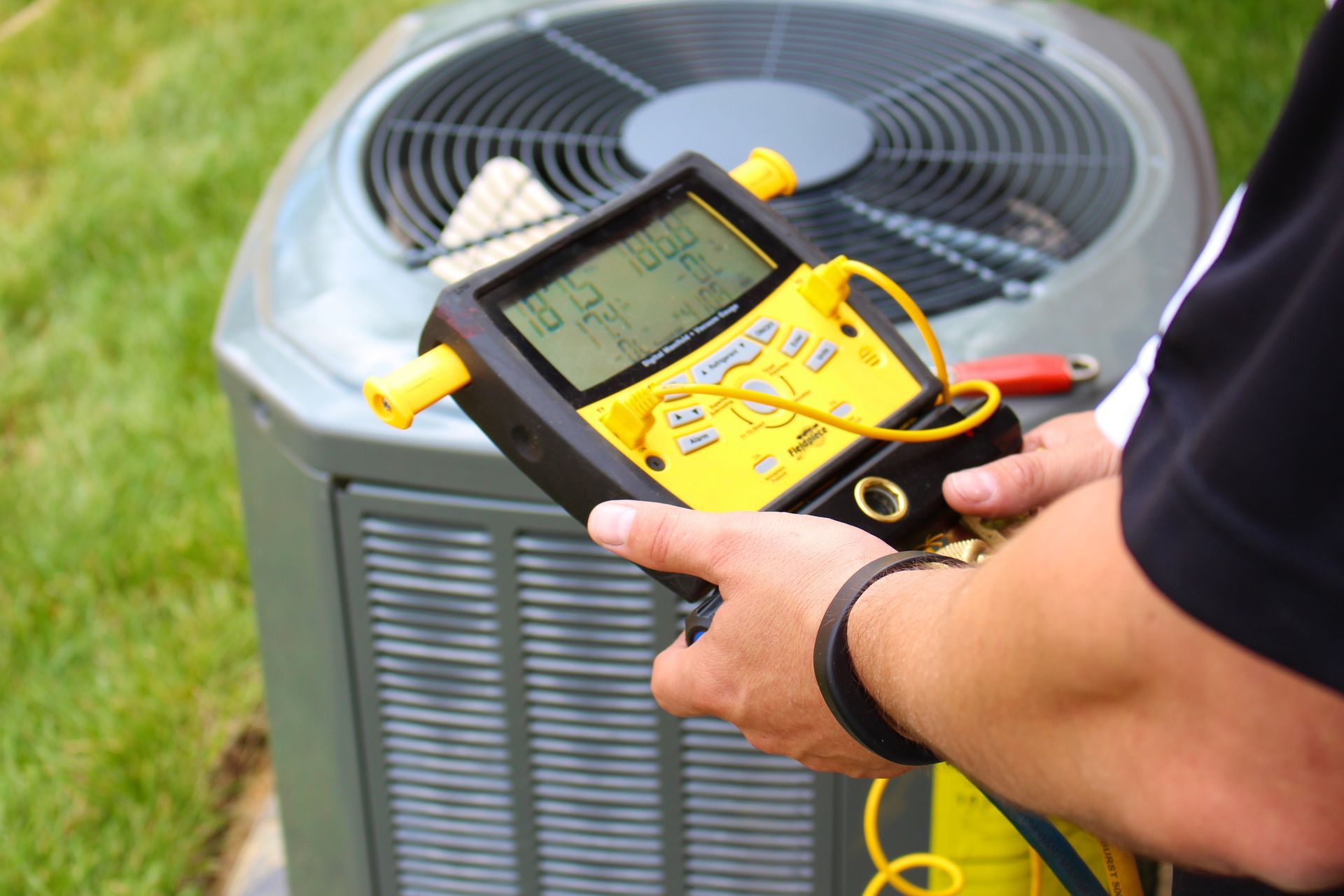
HVAC Replacement
How long do HVAC systems last?
Asking how long an HVAC system lasts is a little like asking how long a vehicle lasts.
Some are ready for retirement much sooner than expected. Others seem determined to keep going year after year.
Most systems end up somewhere around 12 to 15 years, but that's only an average. We've worked on 30+-year-old systems that were still heating and cooling reliably, and we've seen 10-year-old equipment that had reached the point where repairs no longer made much sense. Installation quality, maintenance, how hard the system has to work, (and yes, sometimes a little luck) all play a part.
That's why we don't put much weight on age by itself. If your furnace or heat pump is still operating safely, keeping you comfortable, and the repairs are reasonable, we'd rather help you get more life out of it than replace it just because it's getting older.
Eventually, every system reaches the point where replacement is the smarter investment. Our job is helping you recognize when you've truly reached that point, not convincing you that every older system is already there.
Should I repair or replace my HVAC system?
Repairing your HVAC system is often the right choice, especially when it's been reliable and the repair solves a specific problem.
Where the decision starts to change is when you're fixing the same system over and over again. Maybe the utility bills keep climbing, certain rooms never seem comfortable anymore, or every season brings another repair you weren't expecting. At some point, it's fair to stop asking, "Can it be repaired?" and start asking, "Is it still worth repairing?"
We've worked on plenty of seasoned veterans and trusty old workhorses that were still earning their keep long after most people would've written them off. We've also seen newer systems where the repair history made replacement the better investment.
That's why we don't walk in with a replacement recommendation already made. We'll look at how the system has been performing, what it needs today, what it's likely to need next, and what you're hoping to get out of it. Then we'll lay out your options and let you decide what makes the most sense for your home and your budget.
How much does a new HVAC system cost?
In East Tennessee, most new HVAC systems cost somewhere between $9,000 and $20,000 or more, depending on the equipment, the installation, and what your home actually needs.
We know that's a pretty wide range, but it's also the honest answer.
Replacing one air conditioner with another isn't the same job as redesigning ductwork, solving uneven temperatures, upgrading filtration, adding humidity control, or installing high-efficiency equipment. Two homes that look similar from the driveway can end up needing completely different solutions once you start looking at how they're built and what the homeowners want to improve.
That's why we don't believe in quoting one system and calling it a day. We'll usually give you a few different options, explain what each one does well, what it costs, and where we think the value is. Some homeowners decide the additional comfort or efficiency is worth the investment. Others would rather keep the upfront cost lower, and that's perfectly reasonable too!
Our job isn't to sell you the most expensive system we can. It's to help you spend your money where it actually makes a difference for your family.
What size HVAC system do I need?
Square footage is a good starting point, but it isn't enough to size an HVAC system correctly.
We've seen two houses with the same floor plan need completely different equipment. One has afternoon sun pouring through west-facing windows, very little attic insulation, and a few air leaks. The other is shaded, well insulated, and holds conditioned air much better. From the street they look almost identical. They don't heat and cool the same.
That's also why bigger isn't always better. An oversized air conditioner cools the house quickly but often shuts off before it has time to remove enough humidity. Go too small, and the system may run almost nonstop on the hottest or coldest days of the year trying to keep up.
At Phoenix Home Comfort, we size replacement systems with a Manual J load calculation instead of square footage alone. It takes the house itself into account so we're recommending equipment based on how your home actually performs, not what usually works for a home that size.
How long does HVAC installation take?
Most residential HVAC installations are finished in a single day, so you usually aren't without heating or cooling for very long.
Replacing equipment that uses the existing ductwork is often a one-day job. If the project includes duct modifications, electrical upgrades, zoning, or indoor air quality equipment, it may take longer. Either way, our goal is to have the old equipment out and the new system up and running as quickly as we can without rushing the important parts.
Installing the equipment is only part of the job. Before we pack up our tools, we're checking airflow, verifying refrigerant charge, testing electrical components and safety controls, setting up the thermostat, and making sure the system is performing the way it should.
That's one reason Phoenix Home Comfort doesn't schedule installations like an assembly line. We'd rather spend another hour commissioning a system correctly than spend the next several years wishing we had. Most homeowners will never see that part of the installation, but they'll notice the results every time the system turns on.
What HVAC brand is best?
There isn't one HVAC brand that's the best for every home.
It's a lot like buying a vehicle. Most major manufacturers build entry-level models with a minimum SEER2 rating, to premium systems with advanced comfort, efficiency, and technology features, and everything in between. The badge on the front tells you something, but it doesn't tell you everything.
When we're helping someone choose a new system, the conversation starts somewhere else. What are you trying to improve? Lower utility bills? Better humidity control? Quieter operation? More even temperatures? The answers to those questions usually narrow the choices much faster than picking a brand first.
We also look way beyond installation day. Some of the most important differences between HVAC brands don't show up until years after the installation. Our preferred brands aren't chosen because of advertising campaigns or sales incentives. At Phoenix Home Comfort, we pay close attention to replacement parts availability, warranty support, the quality of the local distributor, and how responsive the manufacturer is when something goes wrong. Those things matter to you years after the installation, and they're a big reason we've chosen the brands we usually recommend.
We'll quote more than one option and explain the tradeoffs so you can decide what makes the most sense for your home and your budget. The brand is part of that conversation, but it's not the whole conversation.
Can I replace only the outdoor unit?
Sometimes you can, and sometimes it's the smartest choice. It just depends on what it's being connected to.
Air conditioners and heat pumps are designed to operate as matched systems. The outdoor unit, indoor coil, refrigerant metering device, and refrigerant all have to work together. If one piece is significantly newer than the others, you can run into compatibility issues, reduced efficiency, warranty limitations, or a system that simply doesn't perform the way it should.
That doesn't mean replacing only the outdoor unit is off the table. If the indoor equipment is still in good condition and is compatible with the new outdoor unit, we'll absolutely look at that option. We've recommended partial replacements before, and we'll recommend them again when they make sense.
Before making that recommendation, Phoenix Home Comfort verifies that the equipment is actually compatible and looks at the age, condition, and expected life of everything that's staying behind. Saving money today doesn't help much if it creates a bigger expense a couple of years from now.
How do I know if my HVAC system is oversized?
A bigger HVAC system isn't always a better one. In fact, if it's too large for the house, it can be harder to keep comfortable than a properly sized system.
The biggest clue is how it runs! If your air conditioner starts, satisfies the thermostat quickly, shuts off, then starts the whole process over again before long, there's a chance it's oversized. That pattern is called short cycling, and it's one of the most common complaints we hear with systems that have more capacity than the house really needs.
The problem isn't that the house gets cool. It's that the system doesn't stay on long enough to do everything it's supposed to do. Air conditioners remove humidity while they're running, so when the cooling cycle ends too quickly, the temperature may look great on the thermostat while the house still feels sticky.
You might also notice uneven temperatures from room to room or a system that seems to be turning on and off all day long.
At Phoenix Home Comfort, we use Manual J load calculations instead of sizing equipment by square footage or rules of thumb. We've replaced oversized systems before, but we've also found plenty that were the right size and had a completely different problem. That's why we'd rather measure first than guess.
How do I know if my HVAC system is undersized?
An undersized HVAC system usually shows itself during the hottest or coldest weather of the year.
You might notice the system running almost nonstop while the temperature inside slowly drifts away from the thermostat setting. Maybe the house reaches 72° most of the summer, then suddenly struggles to get below 76° during a heat wave. The same thing can happen in winter when the coldest mornings arrive.
One thing that surprises a lot of homeowners is that long runtimes aren't automatically a bad sign. A properly sized system should run for longer stretches when outdoor temperatures are extreme. That's exactly what it was designed to do. The difference is that it should still be able to maintain the temperature you've asked for.
If it's running constantly and still falling behind, the system may be undersized, but that's only one possibility. We've also found dirty coils, airflow problems, leaky ductwork, low refrigerant, poor insulation, and other issues creating the exact same symptoms.
Before recommending larger equipment, Phoenix Home Comfort performs a Manual J load calculation and evaluates how the system is actually performing.
Will a new HVAC system increase home value?
It can, but probably not in the way most homeowners expect.
A new HVAC system usually makes a home easier to sell more than it adds a dollar-for-dollar increase to the asking price. Buyers like knowing one of the home's biggest mechanical systems has already been replaced, especially if they aren't looking at the possibility of a major HVAC expense a year or two after moving in.
Most homeowners don't recover the entire cost of a new system through resale alone. You get to enjoy the comfort, efficiency, and reliability while you live there, then the next owner benefits from inheriting a newer system with years of service life still ahead of it.
If you're planning to sell, warranty coverage is worth thinking about too. The extended warranties available through Phoenix Home Comfort are transferable to the next homeowner, which can be another selling point when buyers are comparing similar homes.
We don't recommend replacing an HVAC system just to increase resale value. If the system is still dependable and has plenty of life left, it may make more sense to keep it. If it's becoming unreliable or you're replacing it anyway, the added appeal to future buyers is a nice benefit that comes along with it.
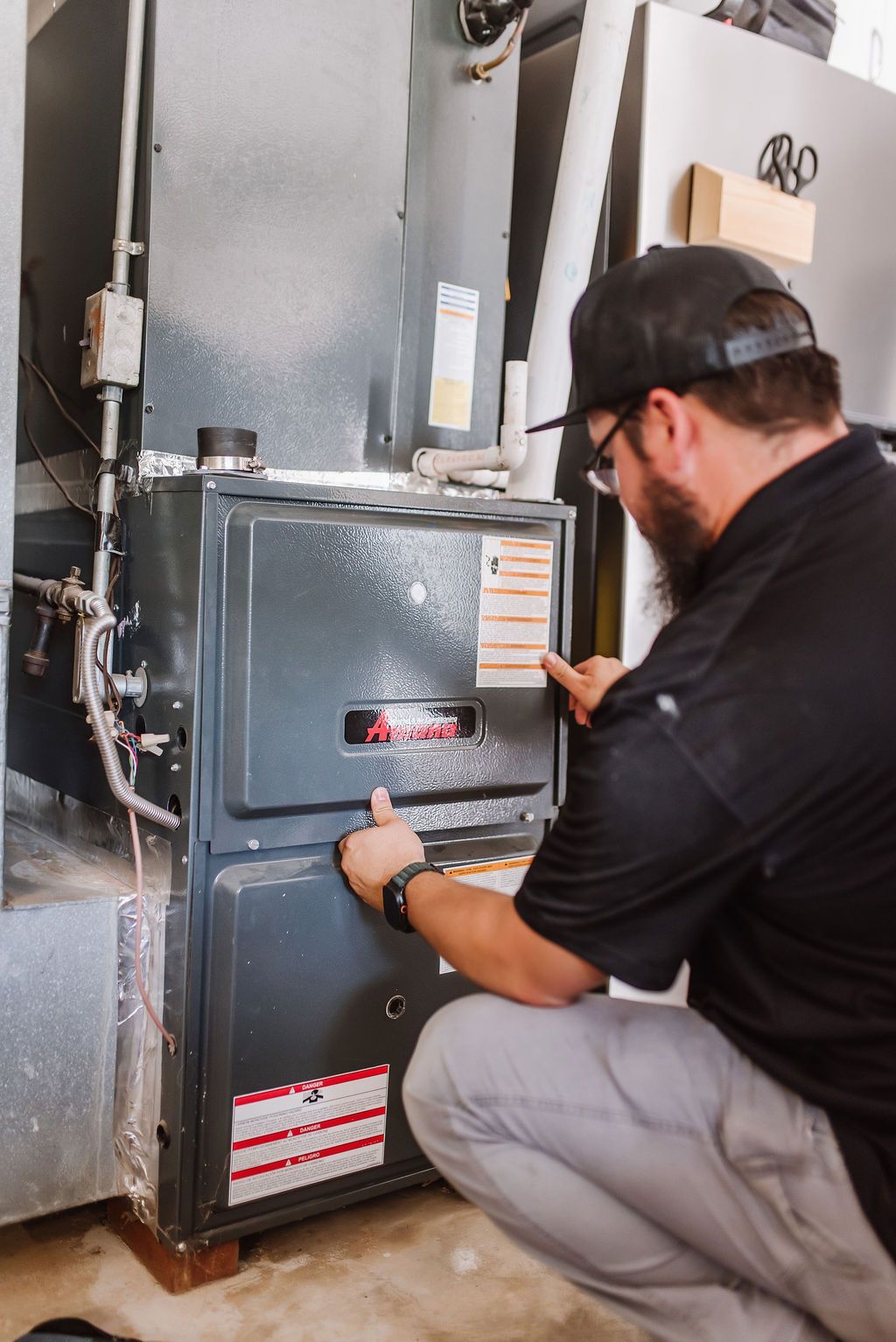
Ductwork & Airflow
How long does ductwork last?
Most ductwork lasts 20 to 30 years or longer, but age is only part of the story.
Ductwork usually doesn't fail all at once. It slowly develops air leaks, insulation gets damaged, sections come apart, flex duct begins to sag, or years of small problems add up until the system just isn't moving air the way it used to.
We've crawled under homes with 30-year-old duct systems that were still in surprisingly good shape. We've also found much newer ductwork leaking air into crawl spaces because it wasn't installed well in the first place.
That's why Phoenix Home Comfort doesn't recommend replacing ductwork based on age alone. We look at airflow, leakage, insulation, and the overall condition of the system first. Sometimes a repair is all it needs. Other times, replacing the ductwork can make a noticeable difference in comfort, efficiency, and how evenly the house heats and cools.
Should ductwork be replaced?
Sometimes. Just like HVAC equipment, it depends on what's wrong.
We've repaired plenty of duct systems by sealing leaks, reconnecting sections, replacing damaged insulation, or making airflow adjustments. A problem in one area doesn't automatically mean the entire duct system has reached the end of its life.
Replacement starts making more sense when the problems are built into the system itself. Poor duct design, widespread air leaks, undersized or oversized ductwork, deteriorated materials, or airflow issues throughout the house can all reach the point where repairing one section at a time no longer gives you the result you're looking for.
That's why Phoenix Home Comfort starts with the complaint, not the ductwork. If one room is always too hot, the airflow is weak, or the system never seems to heat and cool evenly, we'll figure out why before recommending a solution. Whether that's a targeted repair, a redesign, or replacement. The recommendation depends on what your house actually needs.
Can leaky ducts increase energy bills?
Absolutely.
Every bit of air your furnace or air conditioner heats or cools is supposed to end up in your living space. When the ductwork leaks, you’re conditioning the air in the attic, crawl space, basement, or inside the walls before it ever gets to the room it was meant for.
You've already paid to heat or cool that air. You're just not getting the benefit of it.
That lost air also means the HVAC system has to run longer to make up the difference. Rooms farther from the equipment may never feel quite right, airflow can seem weaker than it should, and the utility bill keeps climbing because the system is working harder to overcome a problem you can't even see.
That's one reason Phoenix Home Comfort looks at the duct system just as closely as the equipment itself. Even the most efficient HVAC system can't save you money if part of the air it's produces never makes it into your house.
How do I know if my ductwork is leaking?
Most homeowners never actually see a duct leak. Instead, they notice the symptoms.
Rooms that are difficult to heat or cool, weak airflow from certain vents, uneven temperatures throughout the home, excessive dust, or a system that seems to run longer than it used to can all point toward ductwork problems.
One thing we've found over the years is that duct leaks rarely appear in the middle of a perfectly good section of duct. They're much more likely to show up at joints, connections, boots, or places where the ductwork has shifted over time.
Excessive dust can be another clue, especially if the return ductwork is leaking. A return leak can pull dusty air from a crawl space or attic into the system before it ever reaches the filter, which isn't something most homeowners would think about.
The challenge is that duct leaks aren't the only thing that can cause these symptoms. Airflow restrictions, equipment issues, insulation deficiencies, and duct design concerns can all look very similar. That's why Phoenix Home Comfort starts with the complaint instead of the ductwork. We'll figure out what's causing the problem before we recommend how to fix it.
Is duct cleaning worth it?
Sometimes, yes. It just depends on why you're considering it.
If you've had a major renovation, construction dust, pest activity, water damage, or debris inside the ductwork, professional duct cleaning can absolutely make sense.
Where people get frustrated is expecting duct cleaning to solve problems it wasn't designed to solve. If the real issue is poor filtration, high humidity, leaky return ducts, or airflow problems, cleaning the ductwork may not change much at all.
Because Phoenix Home Comfort doesn't offer duct cleaning, we have no reason to recommend it unless we genuinely think it's the right solution. We work with several reputable duct cleaning companies and are happy to point homeowners in the right direction when it makes sense.
We usually start with a different question: What are you hoping duct cleaning will fix? The answer to that question often tells us whether duct cleaning is the right tool for the job, or whether something else is causing the problem.
Can mold grow in ductwork?
Yes, mold can grow in ductwork under the right conditions.
Like mold anywhere else in a home, it needs moisture to thrive. Condensation, elevated humidity, water intrusion, poorly insulated ducts, or other moisture-related problems can create the conditions that allow mold to grow.
What we don't want homeowners to do is stop at the mold.
In our experience, mold is the symptom. The more important question is why there was enough moisture for it to grow in the first place. If that part isn't addressed, cleaning the ductwork alone will not keep the problem from coming back.
It's also worth remembering that many substances can look like mold. Dust, dirt, microbial growth, insulation fibers, and other debris are often mistaken for mold without proper testing or evaluation.
That's why Phoenix Home Comfort starts by looking for the source of the moisture, not just what's growing because of it. Solving the moisture problem is what prevents the same concern from showing up again.
What causes poor airflow in a home?
Poor airflow isn't always about how much air your HVAC system is producing. Sometimes it's about how much air it can move.
Your HVAC system works in a loop. It pushes conditioned air into your home through the supply vents, then pulls that same air back through the return vents to be heated or cooled again. Restrict either side of that loop and the whole system feels the difference.
A duct system that was never designed to move air efficiently in the first place, a clogged filter, blocked return grille, dirty indoor coil, failing blower motor, damaged ductwork, or even furniture covering a return vent can all reduce airflow. The symptoms are often the same: rooms that never seem comfortable, weak airflow from certain vents, or a system that runs longer than it used to.
That's why Phoenix Home Comfort doesn't assume weak airflow means you need a bigger HVAC system. Before we talk about equipment, we want to know where the air is getting hung up.
Why is one room hotter than the others?
A room that stays hotter than the rest of the house is often a sign of an airflow or heat-gain issue rather than a problem with the HVAC equipment itself.
Duct design, airflow restrictions, insulation, window placement, sun exposure, and return air pathways can all affect how a room feels throughout the day. Bonus rooms, rooms above garages, and west-facing rooms are especially common trouble spots.
In many homes, the HVAC system is producing plenty of cooling, but that room either isn't getting enough of it or is gaining heat faster than the rest of the house. The thermostat can add to the problem too. If it's comfortable where the thermostat is located, the system may shut off even though another room still needs cooling.
That's also why these complaints can be so frustrating. There isn't always one thing to fix. A little extra afternoon sun, slightly lower airflow, and less insulation might not seem like much on their own, but together they can make one room feel completely different from the rest of the house. Depending on the cause, the solution may be as simple as improving airflow or insulation, or it could involve duct modifications, zoning, or even a ductless mini-split. The hard part isn't fixing the room. It's figuring out why it's different from the rest of the house in the first place.
Why is my upstairs hotter than downstairs?
A warmer upstairs is one of the most common comfort challenges in two-story homes, and it doesn't automatically mean there's something wrong with the HVAC system. The second floor has a tougher job. It's sitting directly beneath a hot attic, it naturally collects rising heat from the first floor, and it's often farther from the indoor equipment. All of that adds up to a larger cooling load upstairs than downstairs. Note, If the upstairs is only uncomfortable during the hottest part of the afternoon but catches up after sunset, that's a clue the house may be gaining heat faster than the system can remove it during peak conditions.
The thermostat can make things even more frustrating. In many homes it's located on the first floor, so once that area reaches the set temperature, the system shuts off even though the upstairs could still use more cooling.
That's why a single HVAC system can struggle to keep both floors perfectly balanced. The equipment may be working exactly as it should while the house itself makes the upstairs harder to cool.
Depending on what's causing the imbalance, the solution might be as simple as improving airflow or insulation. Other homes benefit from remote thermostat sensors, additional return air, zoning, or even a ductless mini-split for the rooms that need extra help.
Can ductwork be added to a home addition?
Yes, ductwork can often be added to a home addition, but the existing HVAC system should be evaluated before new ducts are installed.
Adding square footage means asking your HVAC system to heat and cool more space. Some systems have enough capacity and airflow to handle that without a problem. Others are already working close to their limits.
That's why adding another vent isn't always the answer. If the system can't produce enough conditioned air or move enough of it through the ductwork, the new room may struggle to stay comfortable. In some cases, borrowing airflow for the addition can even leave the original part of the house with less than it had before.
Depending on the size of the addition and the home's layout, the best solution might be extending the existing ductwork, adding zoning, upgrading the HVAC system, or installing a ductless mini-split for the new space.
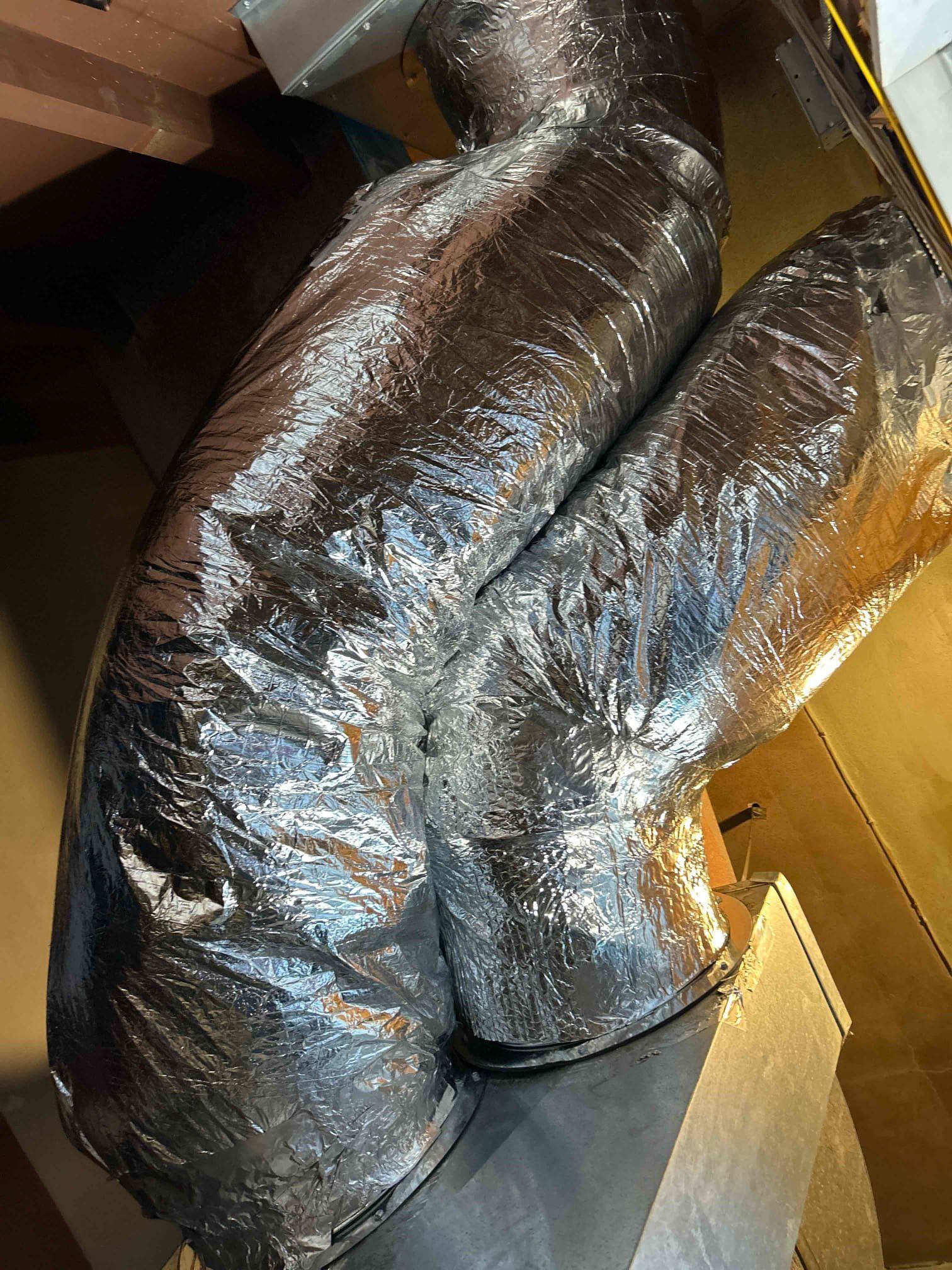
Thermostats & Controls
Why is my thermostat blank?
A blank thermostat usually means it has lost power, not that it has failed.
In many homes, the thermostat gets its power from the HVAC system. If power is interrupted anywhere along the way, the display goes dark. A tripped breaker, a service switch that was accidentally turned off, dead batteries on battery-powered thermostats, or even a blown fuse can all cause it.
One cause that surprises a lot of homeowners is a clogged condensate drain. Many systems have a safety switch that shuts the equipment down before a backed-up drain can overflow and cause water damage. When that happens, the thermostat may go blank simply because the system has intentionally shut itself off.
Before assuming the thermostat needs to be replaced, check the breaker, replace the batteries if it has them, and make sure the HVAC equipment still has power. More often than not, the thermostat is just letting you know something else needs your attention.
Should I install a smart thermostat?
For many homeowners, a smart thermostat is a worthwhile upgrade.
Scheduling, remote access, maintenance reminders, and temperature monitoring make it easier to manage your home's comfort. Whether you're at work, on vacation, or already in bed when you realize you forgot to adjust the temperature, it's nice to have that control in your pocket.
Some smart thermostats also work with remote sensors placed in other parts of the home. Instead of relying on the temperature in one hallway, the system can factor in rooms that actually matter to you. That can make a noticeable difference in two-story homes or homes with stubborn hot and cold spots.
One benefit people don't always think about is caring for family members. We've installed smart thermostats for homeowners with aging parents so they can check the temperature, receive alerts, or make adjustments without making a special trip to the house. For some families, that peace of mind ends up being the feature they appreciate most.
If you're buying one to slash your electric bill, you may be disappointed if you’re looking for a dollar-for-dollar difference. If you're buying one because you want better control over your home and your HVAC system, they're hard to beat.
Just remember that a smart thermostat can't fix airflow problems, leaky ductwork, or HVAC equipment that's struggling. It's a great tool, but it's still working with the system it's connected to.
Can a thermostat go bad?
Yes, thermostats can go bad, but they aren't nearly as common a failure as many homeowners think.
A thermostat has two basic jobs: measure the temperature and tell the HVAC system when to turn on and off. Like any electronic device, it can develop problems with its temperature sensor, display, touchscreen, batteries, internal electronics, or communication with the HVAC equipment. When that happens, you might notice inaccurate temperature readings, a blank display, unresponsive controls, or heating and cooling that doesn't seem to match the settings.
The tricky part is that thermostats often get blamed for problems they didn't cause. A tripped breaker, loose wiring, clogged condensate drain safety switch, blown fuse, or a fault somewhere in the HVAC system can all make it look like the thermostat has failed.
That's why we don't like replacing thermostats just because they're the easiest part to point at. A quick diagnosis can tell you whether the thermostat is actually the problem or whether it's just the messenger.
Why won’t my thermostat hold temperature?
If your thermostat isn't maintaining the temperature you've selected, the thermostat may be the problem, but it shouldn't be the first thing you blame.
Thermostats can develop faulty temperature sensors, communication problems, programming issues, or other electronic failures. When that happens, the system may not respond the way it should, or the temperature on the screen may not match how the house actually feels.
Just as often, though, the thermostat is doing exactly what it's was designed to do. If the HVAC system is struggling with airflow problems, low refrigerant, dirty coils, ductwork issues, high humidity, poor insulation, or even afternoon sun pouring into part of the house, the thermostat can only react to the conditions around it.
Where the thermostat is mounted matters too. If the temperature is comfortable in the hallway where the thermostat hangs, the system may shut off even though the upstairs bedroom or bonus room still needs cooling.
Modern thermostats with remote sensors can help by taking temperatures from more than one location instead of relying on a single hallway.
The first question isn't, "Is the thermostat bad?" It's, "Is the thermostat wrong, or is it accurately telling me the house isn't comfortable?" The answer to that question will points you in the right direction.
What temperature should I set my thermostat in summer?
There isn't one perfect thermostat setting for every home.
For most people, somewhere between 72 and 78 degrees is a comfortable place to start. From there, it's really a matter of finding the balance between comfort and your electric bill.
One thing that's easy to overlook is that your thermostat only tells you the temperature. It doesn't tell you how comfortable you'll feel. Humidity, airflow, sunlight, and even where you're sitting in the house all play a part. That's why a dry 76-degree home can feel more comfortable than a humid 72-degree home.
The weather outside matters too. Your system may have no trouble holding 72 degrees when it's 85° outside. During a stretch of 97-degree afternoons in East Tennessee, asking for that same indoor temperature is a much bigger job. That doesn't necessarily mean anything is wrong with your HVAC system. It may simply be working under much tougher conditions. If your system is holding 75° inside while it's 95° to 97° outside, it's probably doing exactly what it was designed to do.
Instead of chasing one magic number, find a setting that's comfortable for your family and realistic for the weather outside. If your home stays comfortable at 74°, there's no reason to force it to 70° just because someone on the internet said that's the "right" temperature.
What temperature should I set my thermostat in winter?
There's no single "correct" thermostat setting for winter, but most homeowners are comfortable somewhere between 68 and 72 degrees.
Where you land in that range comes down to your family, your home, and what you're trying to accomplish. Some people are perfectly happy at 68° with a sweatshirt on. Others won't stop reaching for a blanket until the thermostat says 72°.
The weather outside matters too. Holding 70° inside when it's 40° outdoors is very different than holding 70° during a single-digit cold snap. As the temperature outside drops, your heating system has to work harder to replace the heat your home is losing.
Many homeowners save money by lowering the thermostat a few degrees while they're asleep or away from home. Small setbacks tend to work well. Letting the house get excessively cold just means the system has a lot more work to do when it's time to warm everything back up.
At the end of the day, the best setting is the one that keeps your family comfortable without making your heating system work any harder than it needs to.
Does adjusting the thermostat save money?
Yes, adjusting the thermostat can save money, but the way you adjust it matters.
The biggest savings come from asking your HVAC system to do less work over the course of the day. Raising the temperature a few degrees in summer or lowering it a few degrees in winter while you're away or asleep reduces the amount of heating or cooling your home needs.
One thing that doesn't help is cranking the thermostat way down when you get home because you want the house to cool faster. Your air conditioner doesn't cool faster because you set it to 65° instead of 72°. It simply keeps running until it reaches the temperature you selected.
That's why a consistent schedule beats constantly chasing the thermostat around the house. A programmable or smart thermostat can handle those adjustments automatically, and after a few weeks you'll probably forget it's even doing it.
Can a thermostat cause short cycling?
Yes, a thermostat can cause short cycling, but it's far from the most common cause.
Think of the thermostat as the part of the system giving instructions. If it's getting the temperature wrong because of a faulty sensor, a programming problem, a communication issue, or even where it's mounted on the wall, it may tell the HVAC system to turn on and off more often than it should.
The catch is that the thermostat isn't the only thing that can create that pattern. Low refrigerant, restricted airflow, dirty coils, oversized equipment, failing components, and safety controls can all make a system start, run for a few minutes, and shut back off.
From the homeowner's perspective, those problems all look the same. The system keeps cycling, but you can't tell why just by watching it.
That's why short cycling is something to professionally diagnose, not guess at. Replacing the thermostat fixes the problem when the thermostat is actually at fault. If it isn't, the short cycling will be right there waiting for the new thermostat too.
Why is my thermostat reading the wrong temperature?
Thermostat accuracy depends on both the thermostat and the environment around it.
A thermostat measures the temperature where it's mounted, not the temperature of the entire house. If it's in direct sunlight, near a supply vent, exterior door, kitchen, television, lamp, or another heat source, the reading may be perfectly accurate for that spot while feeling completely wrong somewhere else.
Thermostats can lose accuracy over time, too. Faulty temperature sensors, aging electronics, low batteries, or communication problems can all lead to incorrect readings.
We've also seen plenty of homes where the thermostat wasn't wrong at all. It was reading the hallway accurately while the homeowners were sitting in an upstairs bedroom or bonus room that felt completely different.
Before assuming the thermostat has failed, ask yourself one question: Is the thermostat wrong, or is it telling the truth about the room it's in?
How often should thermostats be replaced?
Unlike air filters or other maintenance items, thermostats don't have a replacement schedule.
Many last 15 years or more. If it's controlling the system accurately and doing everything you need it to do, there's no reason to replace it just because it's getting older.
Some thermostats are replaced because they've failed. Inaccurate temperature readings, fading displays, unresponsive controls, communication problems, or compatibility issues with newer HVAC equipment can all be signs it's time for a replacement.
Others are replaced because homeowners want features their old thermostat simply doesn't have. Remote access, scheduling, maintenance reminders, remote sensors, and system alerts have changed what a thermostat can do. Even if the old one still works, a newer model can make the system much easier to live with.
A thermostat doesn't wear out on a schedule. Replace it when it stops doing its job, or when a newer one offers features you'll actually use.
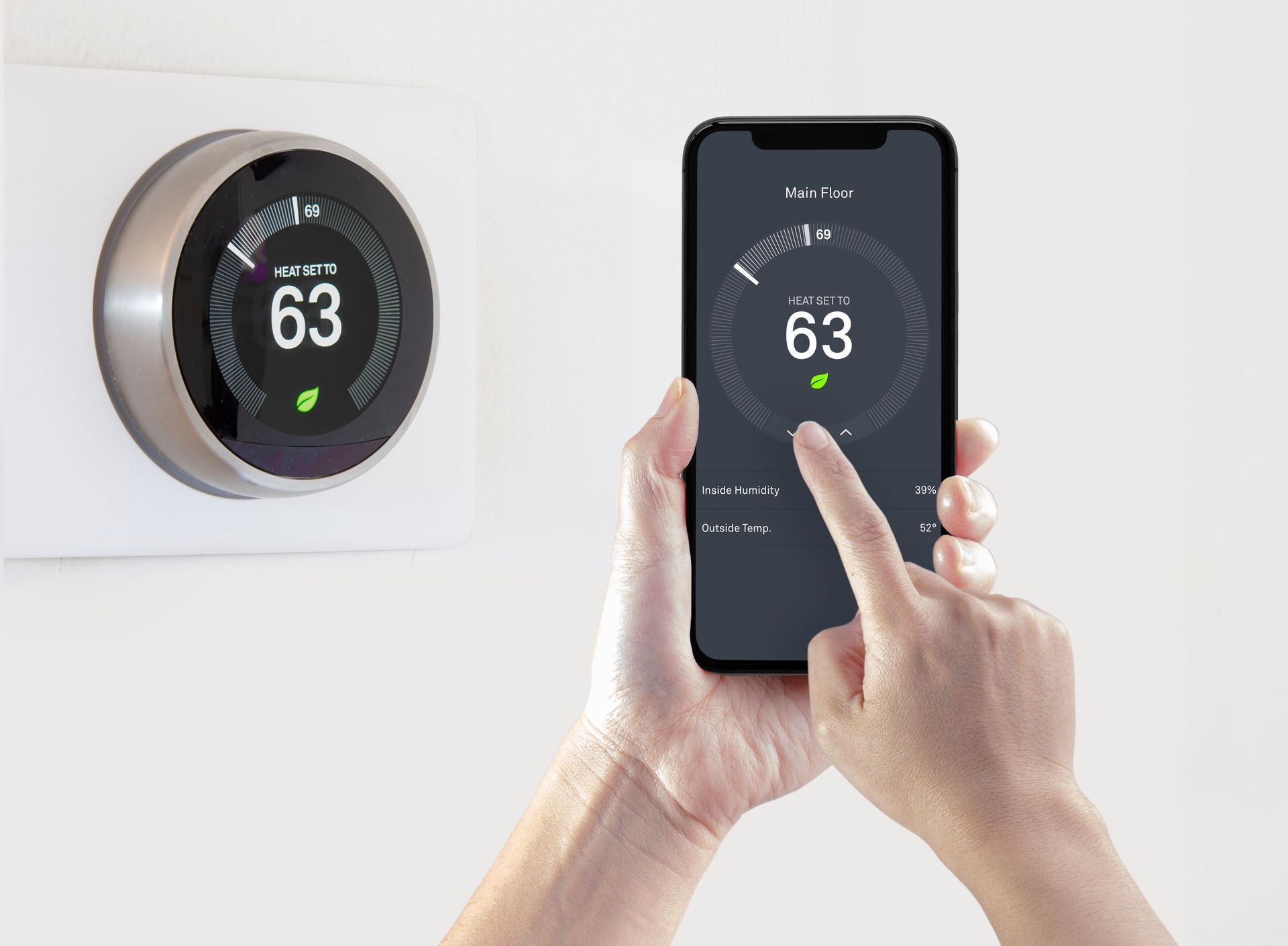
Electrical & HVAC Safety
Why does my HVAC breaker keep tripping?
An HVAC breaker trips because it's protecting the electrical system from something that isn't right. A failing motor, compressor problem, electrical short, damaged wiring, loose connection, weak capacitor, or another component drawing too much current can all cause the breaker to trip.
Think of the breaker as a referee. It isn't looking for excuses to stop the game. It blows the whistle because it sees something that could damage the equipment or wiring if power keeps flowing. That's why a breaker that trips once after a power outage isn't necessarily alarming. A breaker that trips again after you reset it is trying to tell you something.
Resetting it may get the system running for a little while, but it doesn't solve whatever caused it to trip in the first place. The breaker isn't causing the problem. It's responding to one.
Is it safe to reset my HVAC breaker?
Yes, it's generally safe to reset an HVAC breaker once.
Breakers occasionally trip because of a power outage, storm, or another temporary electrical event. If that happened, resetting the breaker may restore normal operation and the system may run normally afterward.
If the breaker trips again, treat that as useful information instead of an inconvenience. Breakers are designed to protect the equipment and your home's wiring. When one keeps tripping, it's reacting to a problem rather than causing one.
One reset is reasonable. If it trips again right away, or becomes part of your regular HVAC routine, it's time to find out why instead of continuing to reset it.
Why does my HVAC system smell like it’s burning?
A burning smell from an HVAC system can range from completely normal to something that deserves attention.
If it's the first time you've turned on the heat after months of warm weather, there's a good chance you're simply smelling dust burning off the heat exchanger or electric heat strips. It's one of the most common calls we get each fall, and in many homes the smell disappears after the system has run for a little while.
Not every burning smell is dust, though. Overheating electrical components, failing motors, damaged wiring, or something contacting a hot surface can create similar odors.
One of the best clues is what happens next. If the smell fades and doesn't come back, it's often just the seasonal dust burn-off. If it gets stronger, lingers, comes back every time the system runs, or is accompanied by smoke, unusual noises, or a tripped breaker, it's time to shut the system off and have it checked.
Your HVAC system shouldn't smell like something is burning every time it runs. A little dust on the first cold day is one thing. A recurring burning smell is another.
What should I do if my HVAC system stops working?
When an HVAC system stops working, start with the basics before assuming the worst.
Make sure the thermostat is set correctly, replace the batteries if it has them, check that the HVAC breaker hasn't tripped, and look at the air filter. If your air conditioner recently stopped during cooling season, it's also worth checking around the indoor unit for water. A clogged condensate drain can trigger a safety switch that shuts the system down to help prevent water damage.
One thing that surprises homeowners is how many built-in safety controls modern HVAC systems have. Sometimes the equipment isn't refusing to run at all. It's intentionally shutting itself off because it detected something that could damage the system.
After that, resist the temptation to keep resetting breakers or cycling the thermostat over and over. If the system still won't start after the basic checks, it's time to call us.
Can power surges damage HVAC equipment?
Yes. Modern HVAC systems contain far more electronics than many homeowners realize.
Control boards, sensors, communication modules, variable-speed motors, and smart thermostats all rely on sensitive electronics. A significant power surge can damage one or more of those components, sometimes immediately and sometimes weeks or months later.
Lightning is what most people think of first, but it's far from the only source. Utility switching, power being restored after an outage, and other electrical disturbances can all create power surges.
Most people wouldn't think twice about putting a surge protector on a television or computer. The HVAC system often gets overlooked, even though it's one of the most expensive electronic devices in the house.
That's why we recommend whole-system surge protection. Compared to the cost of replacing a control board or other electronic components, it's a relatively inexpensive way to help protect your HVAC system from something you can't see coming.
Do HVAC systems need surge protection?
Do HVAC systems absolutely require surge protection? No.
Do we recommend it on modern systems? Yes.
Years ago, HVAC systems were much simpler. Today's equipment contains control boards, sensors, variable-speed motors, and other electronics that help deliver better comfort and efficiency. Those same parts can also be some of the most expensive to replace.
Surge protection doesn't make your home more comfortable or lower your utility bill. It's there for the day something unexpected happens, whether that's a lightning strike nearby, power being restored after an outage, or another electrical surge.
That's why Phoenix Home Comfort recommends surge protection on most new installations. Compared to the cost of the equipment it's protecting, it's a relatively small investment. Hopefully you'll never know it's there. If it does its job, that's probably exactly what will happen.
Why won’t my blower motor start?
The blower motor is what moves heated or cooled air through your ductwork and into the living space. When it doesn't start, you'll usually notice little or no airflow from the vents, even though parts of the system may still seem to be running.
That's what makes blower problems confusing. You might hear the outdoor unit running or the furnace trying to start, yet nothing is coming out of the vents because the air isn't being moved through the house.
A failed capacitor, electrical problem, control board issue, thermostat communication problem, safety switch, wiring fault, or the blower motor itself can all keep it from starting.
From the homeowner's perspective, all of those problems look about the same. The system sounds like it's trying, but the house isn't getting any air. The blower motor may have failed, or it may be waiting for a signal that never comes.
Finding the lack of airflow is easy. Why there's no airflow is the part that takes some experienced digging.
What happens during an HVAC power outage?
During a power outage, your HVAC system shuts down along with the rest of your home's electrical equipment.
When the power comes back, don't be surprised if the HVAC system doesn't. Many modern air conditioners and heat pumps have a built-in delay that keeps the compressor from restarting immediately. It's there to protect the equipment, not because something is wrong.
Waiting five to ten minutes before the system starts again is completely normal. If it comes back on after a few minutes and everything is working normally, there's usually nothing else you need to do.
Power outages can also trip breakers or, in some cases, damage sensitive electronic components if the outage was accompanied by a power surge. If your system still isn't running after you've given it a little time, check the thermostat and breakers before assuming the worst.
How can I protect my HVAC equipment during storms?
Storms can damage HVAC equipment in two ways: through electricity and through physical damage.
Lightning, utility disturbances, and power being restored after an outage can all create electrical surges. High winds can send branches or debris into the outdoor unit, and heavy rain or flooding can create problems of their own.
One of the best long-term protections is an HVAC surge protector. Modern heating and cooling systems contain expensive electronic components, and surge protection can help reduce the risk of damage from the electrical disturbances that often accompany severe weather.
There are a few simple things homeowners can do, too. Keep trees trimmed around the outdoor unit, make sure water can drain away from it, and after a storm, take a quick look before turning the system back on. If a large branch has fallen into the unit or floodwater reached the equipment, it's worth having it inspected before putting it back into service.
Most people think about protecting their windows, vehicles, and patio furniture before a storm. The HVAC system is easy to forget until it's the thing that won't turn back on.
Are HVAC electrical repairs dangerous?
Some HVAC electrical repairs can be dangerous. Others are perfectly safe. The challenge is knowing where that line is.
Replacing thermostat batteries is very different from troubleshooting a high-voltage electrical problem inside an air handler, heat pump, or furnace.
Modern HVAC systems contain both low-voltage controls and high-voltage power. Some components, like capacitors, deserve particular respect because they can store electricity even after the power has been turned off.
What catches many homeowners off guard is that the symptom doesn't always match the level of risk. A system that "just won't turn on" could be something simple, or it could involve energized wiring, a failed electrical component, or a fault hidden behind an access panel. You can't tell just by looking at it. If you're ever unsure whether a repair is safe, it's worth stopping before removing covers or handling electrical components.
Respect for electricity is rarely wasted.
East Tennessee Homeowner Questions
What’s the best HVAC system for East Tennessee?
The best HVAC system for East Tennessee isn't the same for every home because East Tennessee isn't the same everywhere.
Our climate asks a lot from heating and cooling equipment. Summers are long, hot, and humid. Winters are generally mild, but every year seems to bring a few mornings that remind us we're still in the foothills of the Smokies. Then you add in the way homes are built here. Vented crawl spaces are everywhere. Finished basements are common. Bonus rooms over garages have probably started more family thermostat debates than we can count. Those details have just as much influence on comfort as the equipment itself.
Where your home sits matters too! A house tucked beneath the trees in Townsend or along the Foothills Parkway lives a different life than one in Hardin Valley or along Kingston Pike and Turkey Creek corridors, where afternoon sun, and asphalt keep the heat hanging around well after sunset. Homes near Tellico Lake, Fort Loudoun Lake, or the Little River often fight humidity a little differently than homes farther inland, while houses on the ridges around Concord or Topside Road see different wind exposure than homes tucked into the valleys around Powell, Halls, or New Market.
That's why there isn't one HVAC system we recommend for everyone.
For many East Tennessee homes, a heat pump offers an excellent balance of efficiency and year-round comfort. Other homes are better served by a dual-fuel system that takes advantage of our mild winters while still having a gas furnace ready for those January mornings when temperatures drop into the teens. Variable-speed equipment, zoning, and dedicated humidity control can also make a dramatic difference, especially in two-story homes, homes with finished basements, or cabins around Wears Valley that spend part of the year sitting empty.
When someone asks us for the "best" HVAC system, they're usually asking a different question.
"Which system is going to make me happiest over the next 15 or 20 years?"
That answer has a lot more to do with your home, your family's comfort goals, your energy priorities, and your budget than the badge on the front of the equipment.
That’s why we’ll direct the conversation to another part that rarely gets talked about.
If a control board fails eight years from now, how quickly can we get one? Is the local distributor well stocked? How responsive is the manufacturer? Those questions don't seem very important while you're picking out equipment. They become very important on a 97-degree afternoon in July when the AC quits.
That's one reason Phoenix Home Comfort spends more time matching equipment to the home than chasing a particular brand. Every replacement proposal includes multiple options because there isn't one right answer for every family. We'll explain the tradeoffs between comfort, efficiency, features, long-term ownership, and budget, then let you decide what fits your goals.
The best HVAC system for East Tennessee is the one that's designed for your home, performs well in our climate, and comes with a support network that's just as dependable as the equipment itself.
Do heat pumps work during Tennessee winters?
Yes. In fact, East Tennessee is one of the best places in the country to own a heat pump.
Our winters are a little unpredictable. You might be grilling in a sweatshirt one weekend, scraping ice off the windshield the next, then back in short sleeves a few days later. Most of the heating season falls right in the range where heat pumps are at their most efficient, which is one reason they've become so popular here.
If you've heard that heat pumps "don't work below freezing," you're probably thinking of equipment from decades ago. Modern heat pumps continue producing heat well below 32 degrees. As temperatures get colder, they become less efficient, but they don't simply stop working.
When we get those cold snaps that push into the teens, many systems automatically bring on supplemental electric heat. Others are paired with a gas furnace in what's called a dual-fuel system, allowing the heat pump to handle most of the winter while the furnace takes over when it becomes the more economical choice.
That's why you'll find heat pumps everywhere from new neighborhoods in Farragut to farmhouses around Maynardville and homes overlooking Norris Lake. Our climate gives them plenty of opportunities to do what they do best.
At Phoenix Home Comfort, we don't start by asking whether you should have a heat pump. We start by looking at your home, how you use it, and what you want from it. Sometimes a heat pump is the clear winner. Sometimes a dual-fuel system makes more sense. Either way, the goal is matching the equipment to the home instead of forcing every home into the same solution.
Why do Tennessee homes struggle with humidity?
East Tennessee is beautiful, but we practically live in a bowl.
Our region sits between mountain ridges with rivers, lakes, and streams woven throughout the valleys. Warm, moisture-rich air settles into the Tennessee Valley, and once summer arrives, it often feels like the humidity just doesn't have anywhere to go. That's why a July morning in Lenoir City or along the Clinch River can already feel muggy before the sun is fully up.
Then our homes add to it. Showers, cooking, laundry, and even breathing put moisture into the air every day. Many East Tennessee homes also have vented crawl spaces or finished basements, both of which can introduce even more humidity if they're not managed well.
That's one reason an 80-degree day here can feel more uncomfortable than an 88-degree day in a much drier part of the country. Your body cools itself by evaporating sweat. When the air is already loaded with moisture, that process slows down, and you feel hotter than the thermometer says you should.
People often think the air conditioner is only there to lower the temperature. Around here, it's doing two jobs. It's cooling the air, but it's also pulling gallons of water out of your home over the course of a humid summer. That's why an air conditioner that's oversized or short cycling can leave a house feeling cool but still clammy.
We wouldn’t change East Tennessee's geography, but we can control the humidity inside your home. In our experience at Phoenix Home Comfort, that's often the difference between a house that simply reaches the thermostat setting and one that actually feels comfortable.
How does humidity affect HVAC performance?
Humidity changes what your air conditioner has to spend its energy doing.
Most homeowners think their AC has one job: lower the temperature. During an East Tennessee summer, it's actually doing two. It's cooling the air while pulling moisture out of it at the same time.
Think of your air conditioner as having a fixed amount of work it can do. The more effort it spends removing moisture, the less of that capacity is immediately available to lower the temperature. That's why your system can run for quite a while on a muggy August afternoon even though everything is working exactly as it should.
If you've spent much time around Cherokee Lake, Douglas Lake, or the French Broad River, you know how heavy the air can feel after a summer thunderstorm. Your HVAC system feels that too. Every gallon of moisture it removes is work the equipment has to do before your home starts feeling comfortable.
That's also why two homes sitting at 75 degrees can feel completely different. A dry 75-degree home feels cool. A humid 75-degree home still feels sticky because your body can't cool itself as efficiently.
We've been in plenty of homes where the thermostat wasn't the problem at all. Once the humidity was under control, the house felt better without changing the temperature. Sometimes comfort has less to do with making the air colder and more to do with taking the moisture out of it.
What humidity level is ideal for East Tennessee homes?
For most East Tennessee homes, an indoor humidity level between 50% and 55% strikes a great balance between comfort, indoor air quality, and moisture control.
Once humidity starts climbing much above that range, the house changes. Floors can feel slightly tacky under bare feet. The air feels heavier. You may even find yourself lowering the thermostat, not because the house is hotter, but because it feels hotter.
That's a battle homeowners all over our area know well. Whether you're in Jefferson City after a week of summer thunderstorms or down around Vonore where the humidity seems to settle in for days, keeping moisture under control is often just as important as lowering the temperature.
The opposite can happen in winter. As outdoor air dries out, indoor humidity can drop low enough that you notice dry skin, static electricity, or wood floors and furniture shrinking slightly. Comfort isn't just about hitting the right temperature. It's about finding the right balance year-round. We've been in plenty of homes that were sitting at a perfectly reasonable temperature but still felt uncomfortable because the humidity was too high. Get the moisture under control, and suddenly the thermostat doesn't need to work nearly as hard to keep everyone comfortable.
Why do homes in East Tennessee get mold problems?
Did you know the Great Smoky Mountains are part of a temperate rainforest ecosystem? We are surrounded by water and wrapped in mountains.
It's one of the reasons East Tennessee is so beautiful. It's also one of the reasons humidity is part of everyday life here.
Warm, moisture-rich air, frequent summer thunderstorms, and the valleys that weave through our region create an environment where moisture sticks around. Add in the fact that so many East Tennessee homes are built over vented crawl spaces or have full basements, and it's easy to see why mold conversations are so common here.
Mold doesn't grow because a home has an East Tennessee address. It grows because something stays wet.
That moisture might come from a crawl space, a plumbing leak, condensation, poor ventilation, elevated indoor humidity, or even ductwork that's sweating during the summer. Leave those conditions alone long enough, and mold has everything it needs.
One thing we've learned after working in homes across Blount, Knox, Loudon, Jefferson, and Roane counties is that mold is rarely the first problem. It's the thing homeowners notice after moisture has been there for weeks or months. Fix the mold without fixing the moisture, and the mold will be back.
That's why, at Phoenix Home Comfort, we spend as much time talking about humidity, airflow, and moisture control as we do temperature. Around here, keeping a home comfortable also means keeping it dry.
How often should HVAC systems be serviced in Tennessee?
Most HVAC systems in East Tennessee should be professionally serviced at least once a year. If your system is getting some age on it or runs year-round, spring and fall maintenance is an even better investment.
Our climate doesn't give HVAC equipment much of a break. It's not unusual to be running the air conditioner well into October, switch over to heat a few weeks later, then find yourself cooling the house again before spring has fully settled in. Those long shoulder seasons mean systems in East Tennessee often accumulate more runtime than homeowners realize.
The home itself plays a role, too. A split-level in Kodak doesn't ask the same thing of an HVAC system as a basement rancher in Rockford. Homes with vented crawl spaces, finished basements, or additions built years after the original house all put different demands on the equipment, which is one reason maintenance isn't one-size-fits-all.
One thing we've learned over the years is that the best maintenance visits are usually the least exciting. Everything is operating the way it should, coils get cleaned, electrical components are tested, refrigerant performance is documented, and small concerns are caught before they become Saturday-afternoon emergencies.
At Phoenix Home Comfort, every maintenance visit also gives us a baseline. Airflow, temperature split, electrical readings, and system performance are all recorded, making it much easier to recognize when something has changed at your next visit instead of waiting for a breakdown to tell us.
Around here, HVAC systems don't spend much time sitting still. A little preventive maintenance goes a long way toward keeping them ready for whatever East Tennessee weather decides to do next.
Does pollen affect HVAC performance?
If you've lived through an East Tennessee spring, you've probably watched your car turn yellow overnight.
Your HVAC system lives in that same cloud.
The good news is pollen doesn't usually hurt the equipment itself. In fact, your air filter is supposed to catch it before it reaches the blower, indoor coil, and other components. That's the filter doing exactly what it was designed to do.
The catch is that every bit of pollen trapped in the filter makes it a little harder for air to move through the system. As the filter loads up with pollen, dust, and other airborne debris, airflow drops. Less airflow means the system has to work harder to heat, cool, and remove humidity, especially during the same spring months when temperatures are climbing.
If you've ever driven through the dogwoods blooming along the pink-marked Dogwood Trails in Knoxville, or watched yellow pollen collect on porches, you've seen just how much your HVAC system is dealing with this time of year. It isn't filtering a little pollen. It's filtering an incredible amount of it.
That's one reason Phoenix Home Comfort spends time talking about filter selection, not just filter replacement. A filter should capture the pollen you're paying it to catch without restricting airflow more than necessary. The right filter, changed at the right time, protects your equipment and helps it perform the way it was designed to.
Why does my crawl space affect indoor air quality?
Most homeowners don't think much about their crawl space until something goes wrong.
The surprising part is that what happens underneath your home doesn't always stay there.
Homes naturally move air. As warm air escapes through the upper levels of the house, replacement air is pulled in from lower areas, including the crawl space. Building scientists call it the stack effect, but the takeaway is simple: if the crawl space is damp, musty, or full of mold spores, dust, or other contaminants, some of that air can end up inside the home.
That's especially true in East Tennessee. Older homes along roads like Tuckaleechee Pike, Montvale Road, and even neighborhoods just off Chapman Highway were often built with vented crawl spaces because that was the standard at the time. Pair that with our long humid summers, frequent rainfall, and clay-heavy soil that doesn't always drain quickly, and crawl spaces can stay damp far longer than most homeowners realize.
The good news is that crawl space problems are often very manageable. Depending on the cause, solutions might include a vapor barrier, encapsulation, drainage improvements, a crawl space dehumidifier, sealing duct leaks, or improving humidity control throughout the home.
One thing we've learned after years of working in East Tennessee homes is that the room causing the problem isn't always the room where the problem started. Sometimes better indoor air quality begins underneath the floor.
How do Tennessee summers affect air conditioners?
East Tennessee summers ask a lot from air conditioners.
Between the heat, humidity, pollen, and a cooling season that seems to stretch forever, many systems spend months running every day just to keep up. On the hottest afternoons of the year, it's completely normal for an air conditioner to run for long periods without taking much of a break.
The challenge isn't just the temperature. Around here, your air conditioner is doing two jobs at once. It's lowering the temperature while pulling moisture out of the air. That second job takes a surprising amount of work, which is why an 80-degree day with heavy humidity can sometimes be tougher on a system than a drier day that's even hotter.
If you've ever driven from the concrete around Cedar Bluff and West Town Mall toward the tree-lined roads around Walland, or crossed the Little Tennessee River into Loudon County after a summer thunderstorm, you've felt how quickly our microclimates can change. Your air conditioner feels those changes too.
Summer also has a way of exposing small problems that have been quietly developing for months. A weak capacitor that had no trouble in April suddenly can't keep up. A dirty outdoor coil struggles to reject heat. A partially restricted filter or a slightly low refrigerant charge suddenly becomes much more noticeable when the system is working at full capacity day after day.
Around here, air conditioners earn every bit of their paycheck. By the time August rolls around, they've spent months battling heat, humidity, pollen, and whatever East Tennessee weather decided to throw at them next.
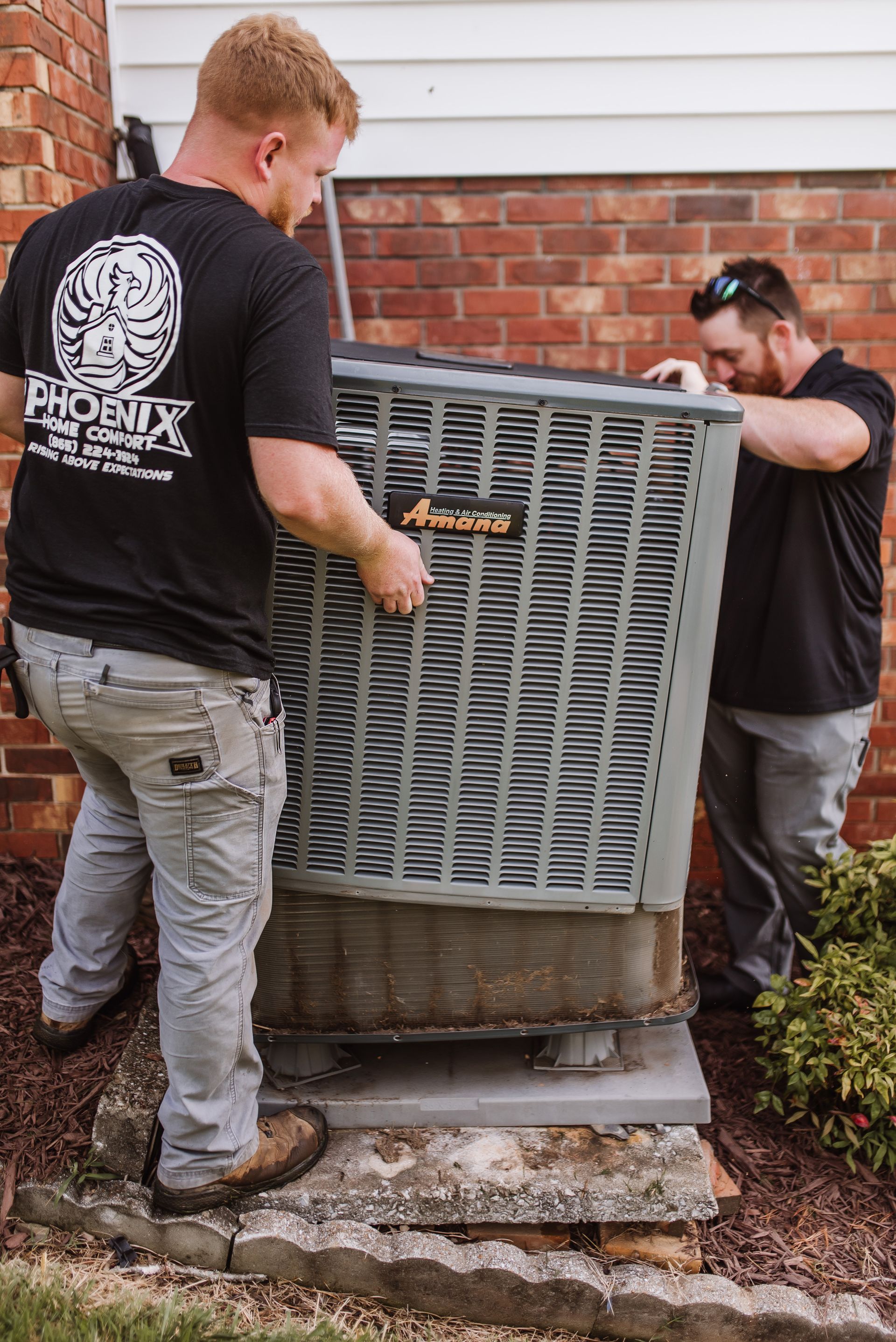
HVAC Buying & Consumer Education
What questions should I ask before replacing my HVAC system?
Replacing an HVAC system is a significant investment, and the questions you ask can be just as important as the equipment you choose.
One of the best questions is simply:
"Why are you recommending this system instead of the others?"
A good contractor should be able to explain the reasoning in plain English. That conversation should cover system sizing, efficiency, humidity control, operating costs, warranty coverage, installation details, and what improvements you can realistically expect in comfort.
It's also worth asking about life after installation. If a control board fails five years from now, how quickly can a replacement be found? Does the manufacturer have a good reputation for standing behind its warranty? Is the equipment supported by a strong local distributor? Those questions rarely come up during the sales process, but they can make a big difference years later.
Don't be afraid to ask what isn't included, either. Will the existing ductwork be evaluated? Is a new thermostat included? Are permits required? Will the old equipment be removed? A clear proposal should leave very few surprises on installation day.
At Phoenix Home Comfort, we'll quote more than one option because there's rarely just one right answer. We'll explain the tradeoffs between comfort, efficiency, features, and budget, then let you decide which one fits your home and your priorities.
A good HVAC proposal shouldn't leave you wondering what you're buying. It should leave you understanding why it's being recommended.
How do HVAC estimates work?
An HVAC estimate is much more than a price for a new heating and cooling system.
It starts with understanding the home. The existing equipment, ductwork, insulation, layout, comfort concerns, humidity issues, efficiency goals, and installation requirements all help determine what makes sense for that particular house. Two homes with the same square footage can end up with completely different recommendations.
From there, the estimate covers the equipment, labor, materials, warranty options, and any additional work needed to complete the installation correctly.
That's why HVAC estimates can vary so much from one company to the next. Two proposals might recommend similar equipment while including very different installation methods, warranty coverage, or scopes of work. Looking at the bottom-line price alone rarely tells the whole story.
At Phoenix Home Comfort, every replacement estimate includes multiple options. We'll explain why each system was selected, the tradeoffs between them, and what you can realistically expect in comfort, efficiency, and operating costs. The estimate isn't just a list of equipment. It's a plan for solving the comfort problems that led you to consider replacing the system in the first place.
Replacing an HVAC system is one of the largest mechanical investments most homeowners will make, and we've never believed anyone should feel rushed into that decision.
That's why we offer free second opinions on HVAC replacements. Whether you choose Phoenix Home Comfort or not, you should understand what you're buying, why it's being recommended, and what the installation is actually going to change.
What does HVAC financing cover?
HVAC financing often covers much more than the heating and cooling equipment itself.
The financed amount can include the equipment, installation labor, ductwork modifications, thermostats, indoor air quality products, surge protection, and other approved work that's part of the project. In many cases, you're financing the complete installation, not just the box sitting outside or in the basement.
Most people think about financing when the air conditioner quits in the middle of July, but that's far from the only reason to use it. Some homeowners finance a higher-efficiency system to lower operating costs. Others use it to add zoning, improve humidity control, replace aging ductwork, or tackle everything at once instead of piecing the project together over several years.
An HVAC system is something most homeowners replace only a handful of times. Whether you finance the project or pay cash, the more important decision is making sure the equipment, installation, and scope of work fit your home and the way you actually live.
What warranties come with a new HVAC system?
A new HVAC system includes two warranties: one covering the equipment itself and another covering the labor if a covered repair is needed.
At Phoenix Home Comfort, every new system includes a 10-year manufacturer parts warranty and a 3-year labor warranty. Homeowners who want longer labor coverage can upgrade to 5-year, 10-year, or 12-year labor warranty options.
Our labor warranties are fully transferable, which can be a valuable benefit if you sell your home before the coverage expires.
When you're comparing proposals, don't stop at asking how long the warranty lasts. Ask what happens if a part fails three years from now. Who handles the warranty claim? Is labor included? Will you owe anything out of pocket? Those answers tell you a lot more than the number of years printed on the proposal.
Should I get multiple HVAC quotes?
Replacing a heating and cooling system is a significant investment, and there's nothing wrong with comparing more than one recommendation.
Just make sure you're comparing more than the price. Ask why a particular system was recommended, how it was sized, what's included in the installation, what warranties come with it, and who will support the equipment years down the road if something goes wrong.
If two companies recommend completely different solutions, don't assume one of them is wrong. Ask each contractor to explain the reasoning behind the recommendation. A good contractor should be able to walk you through the tradeoffs without hiding behind technical jargon or high-pressure sales tactics.
Phoenix Home Comfort offers free second opinions on HVAC replacement proposals. If another contractor has already given you a recommendation, we'll explain what we agree with, where we see things differently, and answer any questions you still have. Whether you choose us or another contractor, you should understand exactly what you're paying for and why it's being recommended.
How do I compare HVAC proposals?
Comparing HVAC proposals isn't about finding the lowest price. It's about understanding what each contractor is actually recommending and why. Two HVAC proposals can recommend similar equipment and still be completely different jobs.
The differences are often in the installation itself. One proposal might include ductwork modifications, startup and commissioning, better warranty coverage, or additional work needed to make the system perform the way it was designed. Another might not. The lowest price isn't automatically missing something, and the highest price isn't automatically the best value. You have to look at what's actually included.
Think beyond installation day, too. If a control board fails five years from now, how quickly can you get one? Does the manufacturer have a strong support network? Does the contractor work with local distributors who keep common parts on the shelf? Those questions don't seem very important while you're shopping, but they matter the day your system needs service.
As you're comparing proposals, ask questions like:
- Why is this system the best fit for my home?
- How was the equipment sized?
- What work is included in the installation?
- Will any ductwork, electrical, or drainage modifications be needed?
- What warranties are included, and what do they actually cover?
- What comfort improvements should I realistically expect?
- How will this system handle East Tennessee's humidity and long cooling season?
- What happens if I need warranty service or replacement parts years from now?
- Why did you choose this manufacturer over other brands?
- Is there anything this proposal doesn't include?
The contractor deserves as much attention as the equipment. Even the best HVAC system won't perform the way it's supposed to if it isn't installed and commissioned correctly, and if service is ever needed, you'll want a company that's still there to stand behind the work.
If you've already received a proposal, Phoenix Home Comfort offers free second opinions. We'll walk through the estimate with you, explain why different contractors may have arrived at different recommendations, answer your questions, and help you compare your options without the pressure to make a decision on the spot.
How can I avoid HVAC scams?
Most HVAC scams have one thing in common: they rely on you making a decision before you have time to think it through.
If someone tells you the entire system has to be replaced, don't be afraid to ask questions. What failed? Why isn't it worth repairing? What changed that makes replacement the right decision today? A good technician shouldn't mind slowing down and walking you through it. In fact, the more questions you ask, the easier their job usually gets.
Pay attention to how they reached the diagnosis, too. Good technicians don't guess. They measure refrigerant pressures, electrical performance, airflow, temperature split, combustion on gas furnaces, and whatever else the situation calls for. Those measurements are what separate a diagnosis from an opinion.
Another thing to watch for is a quote that's based on the equipment instead of the house. If nobody asked about hot or cold rooms, humidity, ductwork, or comfort problems you've been living with, they're replacing a box. They aren't necessarily solving the reason you called in the first place.
And if the conversation starts sounding like, "This price is only good today," or "You need to sign before I leave," we’d say pump the brakes. A failing compressor might need attention soon. A cracked heat exchanger is a safety issue. But pressure and urgency aren't the same thing, and a contractor who's confident in their recommendation usually doesn't need either one.
If you've already received a replacement estimate and just want another set of eyes on it, Phoenix Home Comfort offers free second opinions. We'll explain what we see, answer your questions, and if we disagree with something in the proposal, we'll tell you why.
What should I expect during HVAC installation day?
Most residential HVAC installations are completed in a single day. Larger projects involving extensive ductwork or multiple systems can take longer, but you'll know that before installation day arrives.
We understand that being without heating or air conditioning, even for part of the day, is an inconvenience. We'll keep you updated as the job moves along, and getting your new system up and running is just as important to us as getting it installed correctly.
We'll protect the work areas, remove the existing equipment, install the new system, and verify airflow, refrigerant charge, electrical operation, condensate drainage, safety controls, and thermostat communication before we call the job finished.
Before we leave, we'll walk you through the new equipment, explain the thermostat, answer your questions, and clean up the work areas.
How do I choose the right HVAC contractor?
A good HVAC contractor should leave you with fewer questions than you had when they arrived.
They should ask about the house before recommending equipment. Are some rooms always too hot or too cold? Is humidity a problem? Has the utility bill been climbing? Those answers matter just as much as the equipment they're looking at.
Listen to how they explain their recommendation. You shouldn't need a trade school degree to understand why they're suggesting a repair or replacement. If something failed, they should be able to explain what happened, why it happened, and why they believe their recommendation is the right one.
Pay attention to how your options are presented, too. A contractor who's looking out for you won't act like every old system needs to be replaced, and they won't pretend every repair is a good investment either. They'll explain the tradeoffs and let you make the decision.
The last thing I'd pay attention to is how you're treated when you ask questions. If someone gets defensive, talks over you, or makes you feel rushed, that's probably not the company you want taking care of your home for the next ten or fifteen years.
What should be included in an HVAC quote?
When the estimate is finished, you shouldn't be wondering what you're saying yes to.
You should understand what equipment is being recommended, why it was chosen, what's included in the installation, what warranties come with it, and whether there's anything about your home that needs to be addressed along the way. Some of those details are on the proposal, others come from the conversation. By the time the estimate is over, though, you should have a clear picture of what the project involves and what to expect on installation day.
If you're still confused about what's included or why something was recommended, don't be afraid to ask. A good estimate should leave you with answers, not more questions.
Are HVAC electrical repairs dangerous?
Some HVAC electrical repairs can be dangerous. Others are perfectly safe. The challenge is knowing where that line is.
Replacing thermostat batteries is very different from troubleshooting a high-voltage electrical problem inside an air handler, heat pump, or furnace.
Modern HVAC systems contain both low-voltage controls and high-voltage power. Some components, like capacitors, deserve particular respect because they can store electricity even after the power has been turned off.
What catches many homeowners off guard is that the symptom doesn't always match the level of risk. A system that "just won't turn on" could be something simple, or it could involve energized wiring, a failed electrical component, or a fault hidden behind an access panel. You can't tell just by looking at it. If you're ever unsure whether a repair is safe, it's worth stopping before removing covers or handling electrical components.
Respect for electricity is rarely wasted.
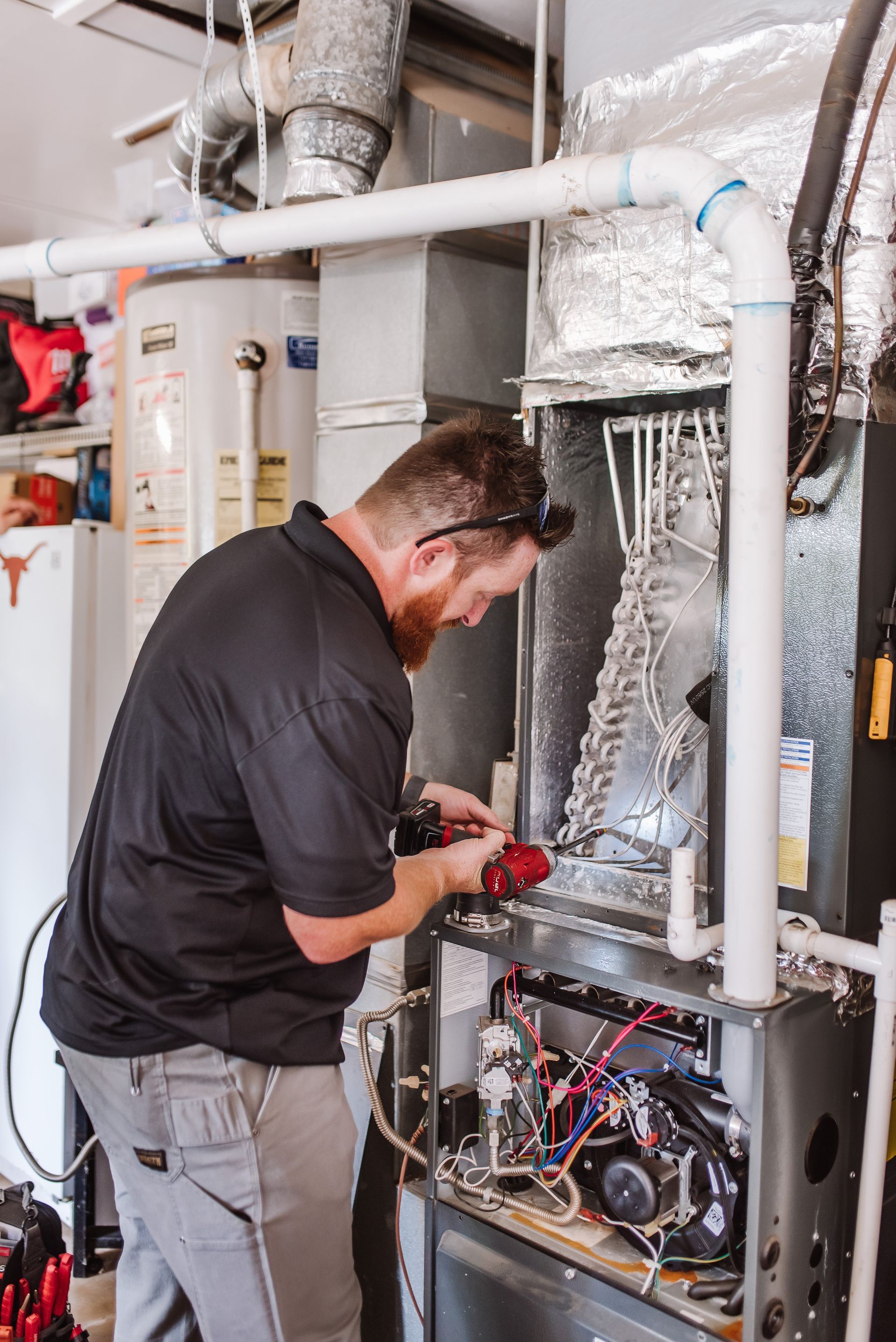
HVAC Costs & Pricing
Why do HVAC prices vary so much between companies?
HVAC prices can vary significantly because you're not always comparing the same project. That's true even when two proposals recommend equipment that looks almost identical on paper.
The differences aren't always in the equipment. They're often in the installation, warranty coverage, materials, and the support you'll receive after the job is finished. Two proposals may recommend similar systems while taking very different approaches to the work itself.
The size of the company plays a role, too. Larger companies often have higher operating costs to support bigger offices, management teams, advertising, and other overhead. Smaller companies often have less overhead, allowing them to stay competitive while still providing excellent equipment and quality installation. On the other end of the spectrum, unusually low prices deserve a closer look. Sometimes they're simply the result of a lean business. Other times, they reflect shortcuts, limited insurance coverage, reduced warranty support, or important work that isn't included in the proposal.
Instead of asking, "Which one is cheapest?" ask, "Why are these prices different?" A good contractor should be able to explain exactly what you're paying for, what's included, and why.
Price tells you what you'll pay today. The real value comes from how the system is
What factors affect the cost of a new HVAC system?
The equipment is only one part of the cost of a new HVAC system.
The first factor is the equipment itself. The size of the system, its efficiency, features like variable-speed technology, and the warranty options you choose all affect the final price.
The second factor is the home. A straightforward replacement costs less than a project that requires ductwork modifications, electrical upgrades, condensate drain changes, or other work to make sure the new system performs the way it was designed.
The third factor is what you want the new system to do. Some homeowners simply want reliable heating and cooling. Others are looking for quieter operation, lower utility bills, better humidity control, cleaner indoor air, or room-by-room temperature control. Those upgrades add to the investment, but they also change what the system delivers every day.
That's why two homes with similar square footage can receive very different proposals. They may have different installation requirements, different comfort goals, or simply different priorities.
At Phoenix Home Comfort, every replacement proposal includes multiple options because there isn't one system that's right for every homeowner. The price changes as the equipment, installation, and goals change.
How much should an HVAC repair cost?
HVAC repair costs vary depending on what failed, how difficult the repair is, the age of the equipment, warranty coverage, and the availability of replacement parts.
As a general guideline, many common HVAC repairs fall between $200 and $1,500, while major component failures such as compressors or evaporator coils can cost significantly more.
The number on the estimate doesn't tell the whole story. A repair may include expensive replacement parts, specialty refrigerants like R-22, multiple problems found during the same visit, or additional work needed to make the repair worthwhile. That's one reason repair estimates can vary so much from one system to the next.
A good HVAC contractor should explain what failed, why it failed, what the repair will accomplish, and whether it makes sense to keep investing in the equipment. A $400 repair on a well-maintained 8-year-old system is a very different decision than a $2,500 repair on a 22-year-old unit that's already had several major repairs.
If a repair estimate seems unusually high, ask questions. A reputable contractor should be able to explain exactly what's included, why it costs what it does, and whether there are other reasonable options. If you're still unsure, getting a second opinion is never a bad idea.
Are HVAC financing options worth considering?
For many homeowners, they are.
Replacing an HVAC system is a significant investment, and financing can make it possible to choose the system your home really needs without draining your savings or putting off the project. It's not just for emergency replacements, either! Some homeowners finance a higher-efficiency system, add better humidity control or indoor air quality products, or choose a longer labor warranty instead of settling for the lowest upfront cost.
Before signing any financing agreement, take a few minutes to understand the monthly payment, the length of the loan, any promotional terms, and what happens when those promotional terms expire. The lowest monthly payment isn't always the lowest overall cost.
At Phoenix Home Comfort, we offer financing through multiple lending partners so we can help homeowners with a variety of budgets and credit situations. We'll explain the available options, answer your questions, and help you understand the differences before you decide. For current financing programs and promotional offers, visit our HVAC Financing Options page.
Does a higher-priced HVAC system save money over time?
A higher-priced HVAC system can save money over time, but only if it's the right system for your home.
Higher-efficiency equipment typically uses less energy, but that's only part of the difference. Premium systems often run quieter, maintain more consistent temperatures, remove humidity more effectively, and offer features that improve day-to-day comfort.
Paying more doesn't automatically mean you'll save more. An oversized system, for example, may cool the house quickly but shut off before removing enough humidity. That leaves the home feeling cool but clammy, and solving that problem later can mean adding a whole-house dehumidifier or, in some cases, replacing the equipment with a properly sized system.
The question isn't whether a premium system is worth the money. It's whether you're paying for features you'll actually notice and benefit from. For some homeowners, a dependable single-stage system is the right choice. Others are happy to invest more for quieter operation, lower energy bills, better humidity control, or room-by-room comfort.
What is included in an HVAC installation price?
When most homeowners think about a new HVAC system, they picture the equipment. In reality, the equipment is only part of what you're paying for.
An installation price also includes removing the old system, setting the new equipment, the materials needed to connect everything, and the skilled labor required to do the job correctly. Depending on the home, it may also include permits, electrical work, condensate drain modifications, a new thermostat, or other work needed to complete the installation.
You're also paying for everything that happens after the equipment is installed. The system has to be started, charged correctly, tested, adjusted, and verified before it's ready to heat or cool the home the way it was designed to.
That's one reason installation prices vary from house to house. You're not just buying a furnace or air conditioner. You're paying for everything it takes to remove the old system, install the new one correctly, and put it into service that will last years.
Why are some HVAC quotes much lower than others?
Everyone likes saving money.
The hard part is figuring out whether you're paying less for the same job or paying less because something changed. Sometimes the difference comes down to the company itself. A smaller contractor may simply have less overhead. Fewer trucks, fewer employees, a smaller office. That can make a real difference in price without changing the quality of the installation.
Other times, the proposal really IS different. Labor warranty coverage, materials, permits, startup procedures, or the overall scope of work may not be the same. Sometimes it's just a lower price because the two contractors aren't proposing the same job.
There's nothing wrong with choosing the lower quote if you understand why it's lower. Just don't assume every proposal includes the same work because the equipment looks similar.
If one estimate comes in thousands of dollars below the others, ask questions. A contractor should be able to explain what's included, what's not, and why their price is different without spending the conversation telling you why everyone else is wrong.
How much does HVAC maintenance cost?
HVAC maintenance costs vary depending on the level of service and whether you're scheduling a one-time visit or joining a maintenance plan.
At Phoenix Home Comfort, a one-time maintenance visit is $129. Homeowners who want the added benefits of our maintenance program can join the Phoenix Club Essentials Plan for $179 per year on systems under seven years old. It includes one comprehensive maintenance visit annually, along with priority scheduling, reduced diagnostic fees, and discounts on repairs.
For systems eight years and older, our Phoenix Club Enhanced Plan is $259 per year and includes two maintenance visits each year. Older equipment benefits from being inspected more often because components wear, refrigerant leaks become more common, and small problems are easier to address before they leave you without heating or cooling.
If your home has more than one system, additional systems can be added to either plan for $99 per year.
What rebates and tax credits are available for HVAC upgrades?
Depending on the equipment you choose, there may be rebates, utility incentives, manufacturer promotions, or financing offers available to help reduce the cost of a new HVAC system.
Here in East Tennessee, many homeowners qualify for TVA EnergyRight® rebates on eligible high-efficiency heating and cooling systems when they're installed by a participating Quality Contractor Network contractor. The rebate amount depends on the type and efficiency of the equipment being installed.
Programs and eligibility requirements change over time, so it's always worth asking what's currently available before making a decision. A recent example is the federal Energy Efficient Home Improvement Credit, which applied to qualifying improvements placed in service through December 31, 2025. The right HVAC system should make sense for your home even without a rebate. Any available incentives are simply an added benefit.
At Phoenix Home Comfort, we'll help you identify any rebates or incentives your new system may qualify for and make sure you have the information you need before the installation begins. You can also learn more on our TVA EnergyRight HVAC page.
How can I budget for HVAC replacement before my system fails?
The best time to start planning for an HVAC replacement is before you need one.
If your system is getting older or beginning to need more frequent repairs, that doesn't automatically mean it's time to replace it. It does mean it's worth learning what replacement might cost, what equipment options are available, and whether financing is something you'd want to use if the time comes.
One question we hear a lot is, "If this were your home, what would you do?" That's usually a better conversation than, "Should I replace it today?" A good technician should be able to tell you how the system is doing today, what repairs might be on the horizon, and whether they'd start setting money aside or keep running it.
Even if your system is still working well, getting a replacement estimate every few years gives you a realistic number to plan around. Equipment, labor, and material costs change over time, and it's much easier to budget when you're working with current information instead of guessing.
If financing is part of your plan, it's worth looking into your options before the system fails. Understanding what's available ahead of time means one less decision to make if you're ever faced with an unexpected breakdown. You can learn more about the financing programs we offer on our HVAC Financing Options page.
How much does HVAC replacement cost in East Tennessee?
Most complete HVAC system replacements in East Tennessee fall between $9,000 and $20,000 or more, depending on the home, the equipment selected, and the scope of the project.
Some straightforward replacements cost less. Many of the systems we install start around $12,000 because we take the opportunity to address anything that will help the new system perform safely and reliably. Depending on the home, that may include updating drain components, electrical connections, filtration, surge protection, or other items that support the installation.
If your existing ductwork is in good condition and doesn't need modifications, your project may fall toward the lower end of the range. Homes that need ductwork changes, electrical upgrades, or other installation work naturally cost more because there's simply more involved than replacing the equipment.
Another factor is the system you choose. A basic single-stage system, a two-stage system, and a variable-speed system all come with different price points and different comfort benefits. The right answer depends on what you're hoping to get from the new system, not just the budget.
If replacing your system wasn't part of the plan, financing can make the investment more manageable. Many homeowners choose to spread the cost over time rather than pay the full amount during an unexpected breakdown. You can learn more on our HVAC Financing Options page.